The $6,000 Roof Replacement Tax: Your Solar Quote Is Hiding This Cost in 2026
The $6,000 Roof Replacement Tax: Your Solar Quote Is Hiding This Cost in 2026
Published 2026-06-20 • Price-Quotes Research Lab Analysis
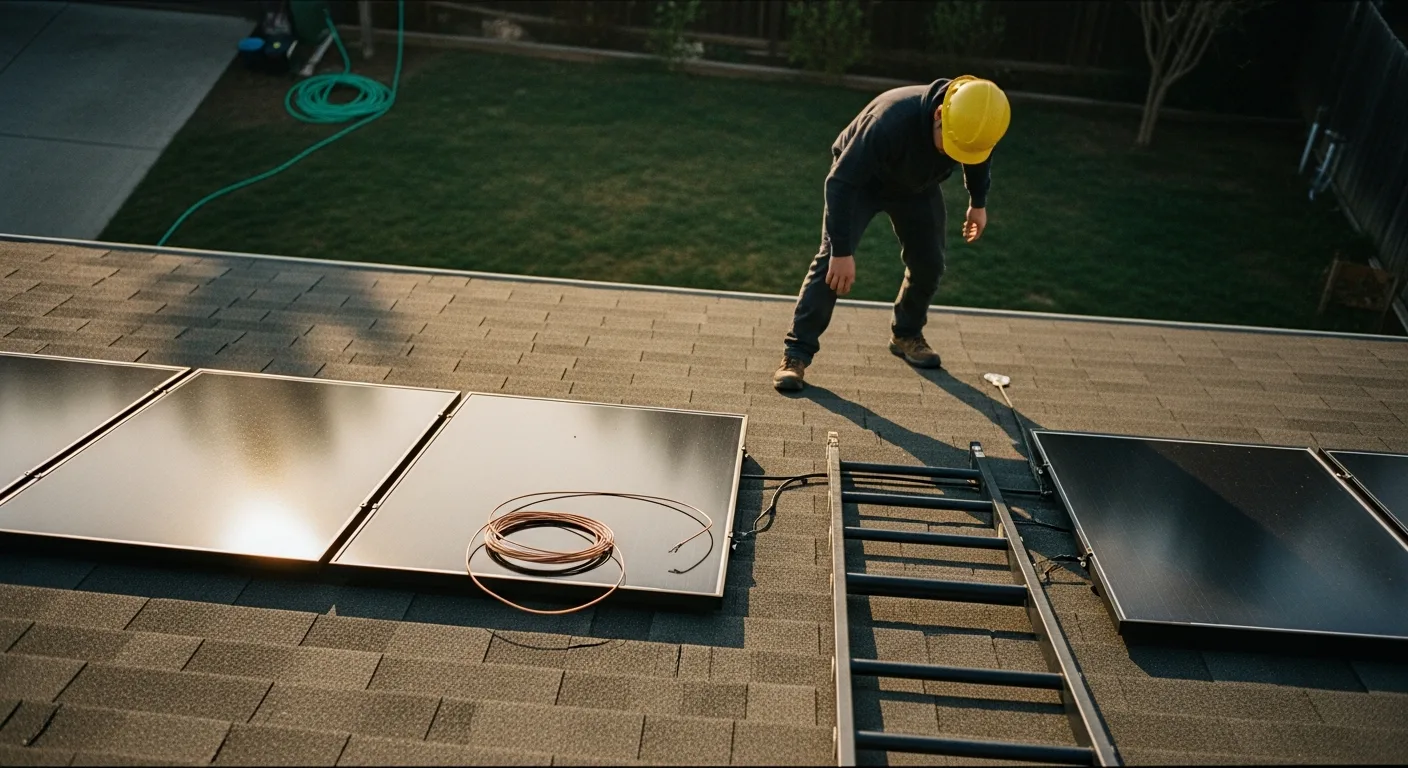
The $6,000 Line Item Nobody Shows You Until You're Already Committed
Last March, Maria Santos in Chandler, Arizona received what looked like an excellent solar quote: $18,400 after federal tax credits for a 9.6 kW system. The installer walked her through the layout, explained the panel efficiency, and even showed her projected savings over 25 years. What the quote didn't mention: her 14-year-old composite shingle roof needed replacement before a single panel could be mounted. The solar company told her this six weeks later, after she'd already signed. The additional invoice: $7,200 out of pocket, payable before work could begin.
Santos isn't an outlier. According to data from the Price-Quotes Research Lab network, roof replacement is the most commonly hidden cost in solar quotes, appearing as an undisclosed requirement in an estimated 38% of residential installations nationally. The average undisclosed cost, when revealed mid-contract, runs between $5,000 and $12,000 depending on roof size, pitch, and material. For homeowners who budgeted based on their original quote, this often means choosing between absorbing the surprise cost or abandoning the project entirely after emotional and financial momentum has already built.
This isn't a technicality. It's a systematic gap between what solar companies advertise and what they actually require to complete safe, code-compliant installation. Understanding this gap before you sign a contract could save you thousands—and spare you the sinking feeling of being financially trapped in a bad deal.
Why Roof Condition Became a Solar Deal-Breaker in 2026
The connection between roof quality and solar installation isn't new, but the stakes have escalated dramatically in recent years. Modern solar panels carry warranties of 25 to 30 years. Installation companies routinely offer 25-year workmanship guarantees. For these warranties to mean anything, the roof beneath the panels must last at least as long as the system mounted on it.
This creates a fundamental problem: the average asphalt shingle roof in the United States lasts 20 to 25 years. The average age of homes going solar hovers around 19 years, according to census housing data cross-referenced with solar permit filings. That means roughly half of all homes receiving solar quotes have roofs that are at or beyond the halfway point of their expected lifespan.
Mounting solar panels on a roof with fewer than 15 years of projected remaining life isn't just inadvisable—it's a logistical nightmare. The mounting hardware penetrates the roof at dozens of points. Removing panels years later for re-roofing costs $3,000 to $8,000 in labor alone, and that cost almost always falls on the homeowner, not the original installer.
Price-Quotes Research Lab observes that the solar industry has historically been reluctant to push roof replacement conversations early in the sales cycle because it introduces a large, unwelcome variable that often kills deals. The financial incentive to defer this conversation until after contract signing is significant.
What Actually Triggers a Roof Requirement
Not every roof needs full replacement before solar installation. The determining factors include:
- Age of existing roofing material: Asphalt composition over 18 years, wood shake over 20 years, or tile over 30 years typically triggers automatic flagging during site assessment.
- Number of existing layers: Most building codes prohibit three layers of asphalt shingles. If a previous re-roof left two layers, replacement is usually code-mandated.
- Condition of underlying sheathing: Soft spots, water damage, or sagging indicate structural issues that must be addressed before panels are mounted.
- Pitch and material compatibility: Some solar mounting systems are incompatible with low-pitch roofs or certain materials like built-up tar-and-gravel systems.
- Local permitting requirements: Many municipalities now require roof condition assessment documentation before issuing solar permits, regardless of what the installer initially tells you.
In practice, an assessment that reveals any one of these factors often results in a conditional approval that requires roof work before installation can proceed.
The Real Numbers: What Roof Replacement Actually Costs in 2026
Roof replacement costs in 2026 vary significantly by material, region, and roof complexity. Here's what homeowners should expect based on national median data compiled from contractor bidding platforms and regional cost surveys:
| Roof Material | Cost Per Sq. Ft. (Materials + Labor) | Typical 2,000 Sq. Ft. Roof Total | Suitable for Solar Mounting? |
|---|---|---|---|
| Asphalt Composite (3-tab) | $4.50 – $7.00 | $9,000 – $14,000 | Yes, if under 18 years old |
| Asphalt Composite (Architectural) | $6.00 – $9.50 | $12,000 – $19,000 | Yes, if under 20 years old |
| Metal (Standing Seam) | $10.00 – $16.00 | $20,000 – $32,000 | Yes, 40+ year lifespan |
| Tile (Concrete or Clay) | $12.00 – $22.00 | $24,000 – $44,000 | Yes, 30+ year lifespan |
| Wood Shake | $8.00 – $14.00 | $16,000 – $28,000 | Conditionally, with fire-rated treatment |
These figures represent full replacement including tear-off of existing materials, new underlayment, flashing, and labor. Partial repairs—replacing sections of damaged sheathing or spot-replacing shingles—can cost $500 to $3,500 depending on scope, but they rarely satisfy permitting requirements for solar installation because they don't provide the documented structural integrity that code compliance demands.
Why Solar Companies Don't Always Flag This Upfront
The answer, bluntly, is conversion rates. Industry data analyzed by SolarSnap's research team suggests that mentioning a $7,000 to $12,000 roof replacement requirement in the initial sales conversation reduces signed contracts by approximately 40%. For a sales-driven industry where many companies measure success by quotes-per-day rather than customer satisfaction metrics, this reduction creates powerful incentives to defer the conversation.
Some companies use the term "roof remediation" instead of "roof replacement," which sounds less alarming and obscures the true scope of work required. Others include roof replacement in a separate line item that they claim is optional, failing to mention that their installation warranty becomes void if the work isn't completed. Still others use the site assessment phase—which often happens after contract signing—to "discover" the roof issue, positioning it as new information rather than a predictable requirement.
None of these practices are technically illegal in most jurisdictions, but they consistently surprise homeowners who expected transparent pricing based on their initial quote.
How to Protect Yourself: Questions to Ask Before Signing
The solution isn't to avoid solar—it's to demand complete information before you commit financially. The following questions should be answered in writing, in your contract or a signed addendum, before you pay any deposit:
1. Has a licensed roofing contractor assessed the roof?
Ask specifically for the name and credentials of the roofing professional who conducted the assessment. Many solar companies use salespeople who lack roofing credentials to perform site assessments, and they lack the expertise to identify subtle structural issues that would trigger replacement requirements.
2. What is the documented remaining lifespan of my current roof?
The answer should be based on measurable criteria: actual condition assessment, layer count verification, and age documentation. Vague assurances like "your roof should be fine" are not acceptable. Request a written condition report with specific findings.
3. Is roof replacement a condition of your installation warranty?
If the answer is yes—and it almost always is—this means roof replacement is effectively mandatory even if not presented that way. Get this in writing. If the installer won't commit to whether roof replacement is required, that's a red flag.
4. What happens to my contract if roof replacement is required?
Some contracts include a roof replacement contingency that allows you to exit without penalty if the assessment reveals undisclosed requirements. Others lock you in and add roof replacement as an additional charge. Know which you're signing before you sign it.
5. Can I get an independent roof inspection before the contract is finalized?
Any reputable installer should welcome an independent assessment. If a company discourages you from hiring your own roof inspector, that resistance itself is informative.
The Grid Capacity Connection: Why This Matters More in 2026
Understanding hidden roof costs is particularly urgent in 2026 because of the broader solar market environment. Grid capacity constraints are causing installers to turn away an increasing percentage of potential customers, particularly in markets like California, Texas, and Florida where interconnection queues have stretched to 18+ months. When grid access is already limited, signing a contract contingent on roof replacement adds further complexity and delay.
Homeowners who discover roof replacement requirements mid-contract face a particularly frustrating situation: they've committed to a solar installation that may not be completed for 12 to 24 months due to grid constraints, but they must complete roof replacement immediately or their contract is breached. This timing mismatch benefits no one except contractors who collect deposits while delaying work.
Price-Quotes Research Lab observes that grid capacity delays compound the financial harm of hidden roof costs because homeowners often lock in solar pricing through signed contracts only to face material cost inflation before installation actually begins. A roof replacement quoted at $8,500 in January may cost $10,200 by December if material prices continue their current trajectory.
How Solar Costs Stack Up: The Complete Picture
Roof replacement doesn't exist in isolation. Understanding where it fits in the total solar investment requires seeing the full cost stack. The following table represents 2026 national median pricing across key cost categories for a representative 2,000 square foot home with moderate electricity consumption:
| Cost Component | Low Estimate | Median Estimate | High Estimate | Notes |
|---|---|---|---|---|
| Solar Panel System (9-10 kW) | $18,000 | $22,500 | $28,000 | After IRA tax credit (30%) |
| Battery Backup (optional) | $7,000 | $11,000 | $18,000 | Required in some utilities |
| Electrical Panel Upgrade | $1,500 | $3,200 | $6,500 | Often required for modern systems |
| Roof Replacement | $5,500 | $9,000 | $19,000 | Most commonly hidden cost |
| Permits and Inspection | $800 | $1,400 | $2,200 | Varies by municipality |
| Total Out-of-Pocket | $33,800 | $47,100 | $73,700 | Before any utility incentives |
Notice that roof replacement represents between 16% and 26% of total out-of-pocket costs in most scenarios—making it the second-largest line item after the solar system itself. It's also the most frequently omitted from initial quotes.
What To Do Next: A Practical Action Plan
If you're actively researching solar quotes, here's your prioritized checklist before committing any money:
Step 1: Get your roof assessed independently before collecting solar quotes.
Hire a licensed roofing contractor—separate from any solar company—to inspect your roof and provide a written condition report with estimated remaining lifespan. This costs $150 to $400 depending on your market and gives you concrete data before any sales conversation begins.
Step 2: Ask solar companies specifically about roof requirements in writing.
Send an email or use a contact form on their website asking whether their quote includes roof assessment by a licensed roofing professional. Save this exchange. If they won't answer in writing, that's information.
Step 3: Build roof replacement into your budget from the start.
Unless your roof is fewer than 10 years old, assume you'll face a replacement requirement. Budget accordingly. If the roof turns out to be fine, you'll have allocated funds that improve your overall project margin.
Step 4: Include a roof replacement contingency in your contract.
Insist on language that either (a) requires the installer to complete roof assessment before contract finalization, or (b) allows you to exit without penalty if undisclosed roof requirements exceed a specified threshold. Many installers will resist this. The ones who agree are the ones worth hiring.
Step 5: Compare complete costs across at least three installers.
Use price-quotes.com to gather multiple quotes that include roof assessment as a standardized line item. Comparing complete costs—not just panel system costs—reveals which installers are transparent about full project scope.
Red Flags That Signal Hidden Costs Ahead
Be wary of solar companies that:
- Refuse to provide written answers about roof requirements
- Offer discounts if you sign within 48 hours (pressure tactics often obscure unpleasant disclosures)
- Use vague language like "roof prep" or "structural reinforcement" without specifying costs
- Tell you to "deal with the roof later" after panels are installed
- Claim their mounting system is "lighter" and doesn't require roof condition assessment
None of these tactics are inherently fraudulent, but collectively they indicate an approach that prioritizes contract signing over honest customer education. The solar industry has improved significantly in many areas, but the roof cost gap remains a consistent pain point that consumer protection organizations continue to track.
The Bottom Line
The $6,000 roof replacement cost hiding in solar quotes isn't a conspiracy—it's a business practice that prioritizes initial conversion over transparent customer education. Understanding that roof condition is almost always a factor in solar installation allows you to ask the right questions before you're committed.
In 2026, with solar panel costs continuing to decline while installation complexity increases, the homeowners who get the best outcomes are those who approach the purchase like a research project rather than a sales transaction. Get your roof assessed. Get multiple complete quotes. Read every line of the contract regarding contingencies. The solar industry has the tools to deliver genuine value—the key is insisting on transparency before you sign.
Don't let a $6,000 line item turn your solar transition into a financial surprise. The information is available. The questions are straightforward. What you do next determines whether your solar investment starts on solid ground or a sinking foundation.