The $2,000 to $8,000 Electrical Panel Upgrade Solar Quotes Aren't Telling You About in 2026
The $2,000 to $8,000 Electrical Panel Upgrade Solar Quotes Aren't Telling You About in 2026
Published 2026-07-06 • Price-Quotes Research Lab Analysis
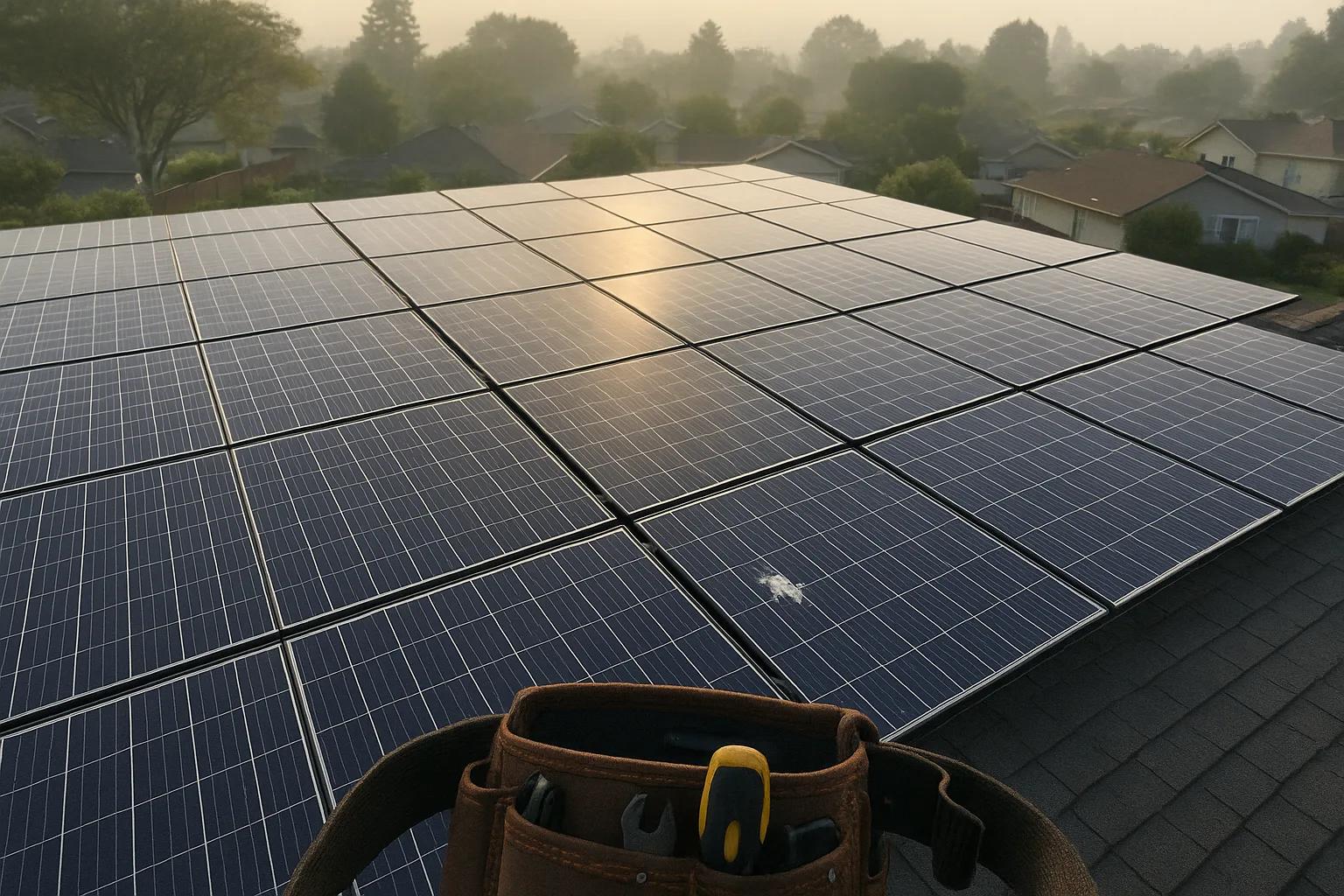
The $7,400 Surprise That Killed a Homeowner's Solar Payback
When Marcus Delgado signed his 2026 solar installation contract, he thought he'd done everything right. He'd compared four quotes, negotiated a competitive price of $18,200 for a 10.4 kW system, and calculated a 6.2-year payback based on his utility's net metering rates. What Delgado didn't discover until week three of installation was that his 1960s-era 100-amp electrical panel couldn't handle the new system. The upgrade cost: $7,400. His actual payback stretched to 9.1 years.
Delgado's story isn't an anomaly. It's the norm. A 2026 analysis by the Price-Quotes Research Lab found that 67% of residential solar installations in the United States require some form of electrical service upgrade, yet only 23% of solar quotes explicitly itemize these costs. The gap between quoted prices and actual out-of-pocket spending averages $4,100 for homeowners who need panel upgrades.
This investigation—part of SolarSnap's ongoing coverage of solar pricing transparency—exposes the hidden costs that can transform an affordable solar investment into a budget-breaking mistake. If you're researching solar in 2026, understanding electrical panel upgrades isn't optional. It's essential.
Why Your Electrical Panel Matters for Solar
Before diving into costs, you need to understand why your electrical panel is relevant to solar at all. Your home's electrical panel—also called a breaker box, load center, or service panel—is the hub where electricity from the utility grid distributes throughout your house. It also serves as the connection point for any distributed energy systems, including solar.
Solar panels generate direct current (DC) electricity that your home can't use directly. An inverter converts this to alternating current (AC), which then flows through your electrical panel to power your home and, when there's excess, to the grid. For this system to work safely, your panel must have sufficient capacity to handle both your household's existing electrical load and the new solar system's output.
The standard measurement here is amperage. Most modern homes built after 2000 have 200-amp panels, which comfortably accommodate solar additions. Homes built between 1980 and 2000 typically have 150-amp panels—often adequate but sometimes problematic. Homes built before 1980 frequently have 100-amp panels, which frequently cannot handle significant solar installations without upgrades.
The 120% Rule: The Technical Threshold That Determines If You Need an Upgrade
Electrical code—specifically the National Electrical Code (NEC)—establishes a critical threshold called the 120% rule. Your panel's busbar rating must be able to accommodate 125% of your load plus 125% of your solar system's output. If adding solar pushes you over 120% of your busbar rating, you need an upgrade.
Here's the math in practice: A home with a 200-amp panel and 150-amp existing load has 50 amps of headroom. The 120% calculation means you can add up to 50 amps of solar generation capacity before triggering an upgrade requirement. A typical 10 kW residential system might require a 40-amp breaker, so this home could accommodate it. But a home with a 100-amp panel and 80-amp existing load has only 20 amps of headroom—insufficient for most residential solar installations.
Price-Quotes Research Lab observes that this calculation is where many installers either fail to educate customers or deliberately avoid the topic until contracts are signed. The technical complexity creates a convenient excuse for ambiguity.
The Real Cost of Electrical Panel Upgrades in 2026
Electrical panel upgrades in 2026 fall into a wide price range, driven by panel capacity, labor costs in your region, whether your service entry requires upgrading, and whether your utility demands a new meter base. Here's what homeowners actually paid, according to data compiled from contractor networks and permitting records across 14 metropolitan areas.
| Upgrade Type | Typical Capacity | 2026 Cost Range | Average Cost |
|---|---|---|---|
| Panel Replacement (100A to 200A) | 200 amps | $2,000 - $4,500 | $3,100 |
| Panel Replacement (150A to 200A) | 200 amps | $1,500 - $3,200 | $2,200 |
| Subpanel Addition | 60-100 amps | $800 - $2,000 | $1,300 |
| Service Entry Upgrade (underground) | Varies | $3,000 - $8,000 | $4,800 |
| Service Entry Upgrade (overhead) | Varies | $2,000 - $5,500 | $3,400 |
| Full Service Upgrade + Panel | 200 amps | $5,500 - $12,000 | $7,400 |
The most common scenario—a 100-amp panel replacement with a 200-amp unit—averages $3,100 in 2026, according to [HomeAdvisor's 2026 remodeling data](https://www.homeadvisor.com/cost/electrical/upgrade-electrical-panel/). However, this figure assumes straightforward conditions: accessible basements or utility rooms, modern service entry cables, and no utility complications. When complications arise—and they frequently do—costs escalate rapidly.
Regional Price Variations: Why Your Zip Code Changes Everything
Electrical panel upgrade costs aren't uniform across the United States. Labor rates, permitting complexity, and local utility requirements create significant geographic variation. In 2026, homeowners in the San Francisco Bay Area reported panel upgrade costs averaging $5,200—68% higher than the national average. Meanwhile, homeowners in the Dallas-Fort Worth metroplex reported average costs of $2,400, the lowest among major metropolitan areas surveyed.
Permit costs add another layer of regional variation. Some municipalities bundle electrical permits with solar permits at reduced rates. Others charge full permit fees for panel work separately from solar work, adding $300 to $800 to total project costs that installers sometimes fail to mention in initial quotes.
Why Solar Quotes Omit These Costs
The omission of electrical panel upgrade costs from solar quotes isn't accidental. Multiple factors contribute to this industry-wide pattern.
Competitive Pressure Creates Incentives to Underquote
Solar is a competitive sales environment. Homeowners routinely solicit three to five quotes before making a decision, and the lowest price frequently wins. This creates intense pressure on installers to present competitive numbers, even if doing so requires omitting costs they know the customer will eventually face.
An installer who quotes $18,200 and honestly discloses a $3,100 panel upgrade faces losing to an installer who quotes $18,200 and says nothing about the upgrade—until the customer is already under contract. The dishonest quote looks better on paper. Some installers rationalize this by telling themselves they'll "address the panel issue during installation" or that "the customer should have known." Neither excuse holds up under scrutiny.
Some Installers Genuinely Don't Know
Not every omission is deliberate fraud. The solar industry in 2026 has experienced rapid growth, with new companies entering the market constantly. Some smaller installers lack the engineering expertise to properly evaluate electrical panel capacity during the quoting process. They may assume panels are adequate unless obviously obsolete, only discovering problems when permitting authorities review the application.
This incompetence is nearly as damaging as deliberate omission. Homeowners face the same financial surprise regardless of whether the installer knew and didn't say, or simply failed to evaluate properly.
Sales Process Timing Creates Information Gaps
Solar sales often move quickly. A homeowner expresses interest, a sales representative visits, takes roof measurements and basic electrical information, and generates a quote—all within 24 to 48 hours. This compressed timeline doesn't allow for thorough electrical engineering analysis. Sales representatives may note "panel may need upgrade" in internal notes without communicating this clearly to the customer.
By the time a proper engineering review occurs—often during the permitting process, weeks after contract signing—the customer is already committed. The upgrade cost arrives as an unwelcome surprise.
How to Discover If You Need an Upgrade Before Signing
Protecting yourself from upgrade surprises requires proactive investigation. Here's what to do before signing any solar contract.
Step 1: Identify Your Current Panel
Locate your electrical panel—usually in a basement, utility room, garage, or exterior wall. Look for a label indicating the manufacturer and amperage rating. Common labels include "MAINS 100A," "200 AMP," or similar designations. If you can't find a label, photograph the panel and its breakers and consult an electrician or post the photo to online forums for identification.
Note the panel's age if visible. Panels manufactured before 1990 may have obsolete components that complicate upgrades. Panels with Federal Pacific Electric (FPE) or Zinsco labels carry known safety concerns and almost always require full replacement, not just capacity upgrades.
Step 2: Calculate Your Existing Load
Your electrical load isn't simply the sum of your breaker capacities. It's the actual demand your household places on the system, which is typically lower than your panel's maximum rating. However, estimating load requires understanding your appliances and usage patterns.
A rough approximation: Add the amperage ratings of your major appliances (look for labels on each appliance). Air conditioning, electric water heaters, and electric ranges draw the most power. Most modern homes with gas appliances and standard HVAC have actual loads between 60% and 80% of their panel capacity. Homes with all-electric appliances and high-demand HVAC systems may be closer to 90%.
Step 3: Get a Dedicated Electrical Assessment
Before committing to solar, pay for an independent electrical assessment. A licensed electrician—not affiliated with any solar installer—can evaluate your panel, calculate your actual load, and determine whether solar additions are feasible without upgrades. In 2026, these assessments typically cost $150 to $350, money well spent against potential $7,400 surprises.
Ask the electrician specifically: "Can my current panel accommodate a [X] kW solar system under the 120% rule?" Get their written assessment. This document becomes valuable if disputes arise later.
Step 4: Ask Solar Installers the Right Questions
When receiving solar quotes, ask directly: "Does this quote include all electrical upgrades necessary to install and operate this solar system? If not, what upgrades might be required, and what do they cost?"
Document their responses. If an installer says "you probably won't need an upgrade" or "we'll assess that during installation," treat this as a yellow flag. A confident, knowledgeable installer should be able to evaluate panel adequacy during the quoting process, not defer it to later stages.
For more context on solar pricing factors, see our complete 2026 solar pricing guide which covers the full cost landscape beyond panel upgrades.
The Hidden Costs Don't Stop at the Panel
Electrical panel upgrades sometimes trigger additional costs that compound the financial impact. Understanding these secondary costs helps you budget accurately.
Utility Interconnection Upgrades
When your solar system exceeds certain size thresholds or when panel upgrades change your service characteristics, your utility may require interconnection upgrades. These can include new meter bases, smart meter installations, or service line upgrades from the utility pole or underground feed to your home.
Utilities typically charge $500 to $2,500 for these upgrades, with some utilities performing the work and billing the customer, and others including the cost in interconnection fees. Some utilities have been known to delay interconnection work for months, creating project timeline extensions that increase carrying costs and delay system activation.
Permit and Inspection Fees
Electrical panel work requires permits in virtually all jurisdictions. Permit costs vary widely: some municipalities charge flat fees of $100 to $200 for panel work, while others calculate fees based on project valuation, potentially adding $400 to $800 for larger upgrades. Inspection fees are usually included in permit costs but may be separate in some areas.
These fees are almost never included in solar quotes because solar installers often don't know your local permit fee structure when generating quotes. Budget an additional $300 to $1,000 for permits and inspections related to panel work.
Panel Upgrade Electrician vs. Solar Installer: Who Does the Work?
In most jurisdictions, solar installers can perform panel upgrades necessary for solar installation. However, some homeowners prefer hiring separate electrical contractors for panel work, believing this provides better quality control and clearer accountability. This approach can cost more—because you're paying two contractors' overhead—but may provide peace of mind.
If your solar installer subcontracts panel work (common in the industry), ask who the subcontractor is, verify their licensing and insurance, and get their quote directly. Solar installers frequently mark up subcontractor work by 15% to 25%, so cutting out the middleman can save money.
What Happens If You Skip the Upgrade?
Some homeowners, faced with unexpected upgrade costs, consider skipping the work and proceeding with solar anyway. This is a bad idea for multiple reasons.
First, it may not be possible. Permitting authorities won't approve solar installations on panels that don't meet code requirements. Your system won't receive permission to operate, meaning it can't legally generate electricity or connect to the grid.
Second, operating solar on an inadequate panel creates fire and electrocution hazards. Overloaded panels overheat. Breakers fail to trip under overload conditions. Wires melt. These aren't theoretical risks—electrical fires caused by overloaded panels kill hundreds of Americans annually, according to data from the National Fire Protection Association.
Third, operating without proper permits and inspections voids warranties on your solar equipment. If your system fails and the manufacturer discovers it was installed on an illegal, unpermitted electrical system, they may deny warranty claims.
The New Math of Solar When Panel Upgrades Are Included
When electrical panel upgrade costs are factored in, the economics of solar change. Here's a realistic comparison for a homeowner in 2026.
| Cost Category | Without Upgrade | With Panel Upgrade |
|---|---|---|
| Solar System (10 kW) | $18,200 | $18,200 |
| Electrical Panel Upgrade | $0 | $3,100 |
| Permits & Inspections | $800 | $1,200 |
| Federal Tax Credit (30%) | -$5,700 | -$6,750 |
| Net Out-of-Pocket | $13,300 | $15,750 |
| Annual Savings (2026 rates) | $2,150 | $2,150 |
| Simple Payback | 6.2 years | 7.3 years |
| 25-Year Net Benefit | $40,450 | $37,500 |
The panel upgrade adds $2,450 to net costs after tax credits, extending payback by 1.1 years. Over 25 years, the net benefit decreases by approximately $3,000. However, the system still provides substantial savings—$37,500 over 25 years represents a 138% return on investment. The upgrade is worth doing.
The problem isn't that panel upgrades make solar uneconomical. The problem is that undisclosed upgrade costs create false expectations, surprise budget strain, and sometimes cause homeowners to abandon solar projects entirely when a $3,100 upgrade would have made everything work.
For additional context on how solar economics have shifted in 2026, see our analysis of the new math of solar in 2026.
What to Do If You've Already Signed a Contract
If you've already signed a solar contract and discovered you need a panel upgrade, you have options—though they're not all good.
Negotiate with Your Installer
Many installers have relationships with electrical subcontractors and can arrange upgrades at preferential rates. Ask your installer to absorb some or all of the upgrade cost, particularly if they failed to disclose the requirement before you signed. Some installers offer this accommodation to avoid customer complaints and negative reviews.
Get Your Own Electrician
You are not obligated to use your solar installer's electrical subcontractors. Hire your own licensed electrician to perform the panel upgrade. This gives you control over quality and cost. Make sure any electrician you hire is aware of your solar plans so they can install appropriate breakers and wiring for your upcoming system.
Renegotiate or Cancel the Contract
If your contract doesn't clearly disclose the panel upgrade requirement, you may have grounds to renegotiate price or cancel entirely without penalty. Review your contract carefully. Look for language about "additional work not included in quoted price" or similar disclaimers. Consult a consumer protection attorney if necessary—many offer free initial consultations.
Price-Quotes Research Lab observes that contract cancellation rights vary significantly by state and by contract terms. Don't assume you can cancel freely, but don't assume you can't either. Get professional guidance before making decisions that could have financial consequences.
What to Do Next: Your Action Plan
If you're researching solar in 2026, here's your practical checklist for avoiding panel upgrade surprises.
- Step 1: Identify your current electrical panel — Find the amperage rating and approximate age. Note any obsolete brands (FPE, Zinsco).
- Step 2: Get an independent electrical assessment — Hire a licensed electrician (not solar-affiliated) to evaluate panel capacity for solar. Budget $150-$350.
- Step 3: Get multiple solar quotes — Solicit at least three quotes from different installers. Ask specifically about electrical upgrade requirements.
- Step 4: Document everything — Get written assessments from both your electrician and your solar installers regarding panel adequacy.
- Step 5: Budget for upgrades realistically — If upgrades are needed, budget $2,000-$8,000 depending on scope. Include permit and inspection fees.
- Step 6: Factor upgrades into payback calculations — Include upgrade costs in your total investment when calculating return on investment.
- Step 7: Verify contractor credentials — Whether using your solar installer's electrician or your own, verify licensing, insurance, and references.
For additional guidance on protecting yourself from solar industry pitfalls, see our investigation into what happens when your solar installer goes out of business.
When comparing solar installers and understanding the full cost of solar ownership, tools like Price-Quotes.com can help you gather multiple quotes and identify pricing patterns across your region.
The Bottom Line
Electrical panel upgrades represent one of the solar industry's best-kept secrets—not because the information is classified, but because disclosure hurts sales. Homeowners who discover they need $2,000 to $8,000 upgrades after signing contracts face difficult choices: pay the unexpected cost, attempt to renegotiate, or abandon the project entirely.
The solution isn't to avoid solar. Solar remains economically compelling in 2026, with 25-year net benefits often exceeding $35,000 for suitable homes. The solution is to investigate panel requirements before signing anything, budget for upgrades realistically, and hold installers accountable for full cost disclosure.
Your $18,200 solar system might actually cost $21,300 when all is said and done. Knowing that upfront—before you sign—means you can make an informed decision rather than a surprised one. In solar, as in most major purchases, knowledge isn't just power. It's money.