Solar Panel Costs Just Crashed: The Definitive 2026 Buyer's Guide to Unlocking Subsidized Power
Solar Panel Costs Just Crashed: The Definitive 2026 Buyer's Guide to Unlocking Subsidized Power
Published 2026-04-09 • Price-Quotes Research Lab Analysis
The Anatomy of a Solar System: Deconstructing Your Investment
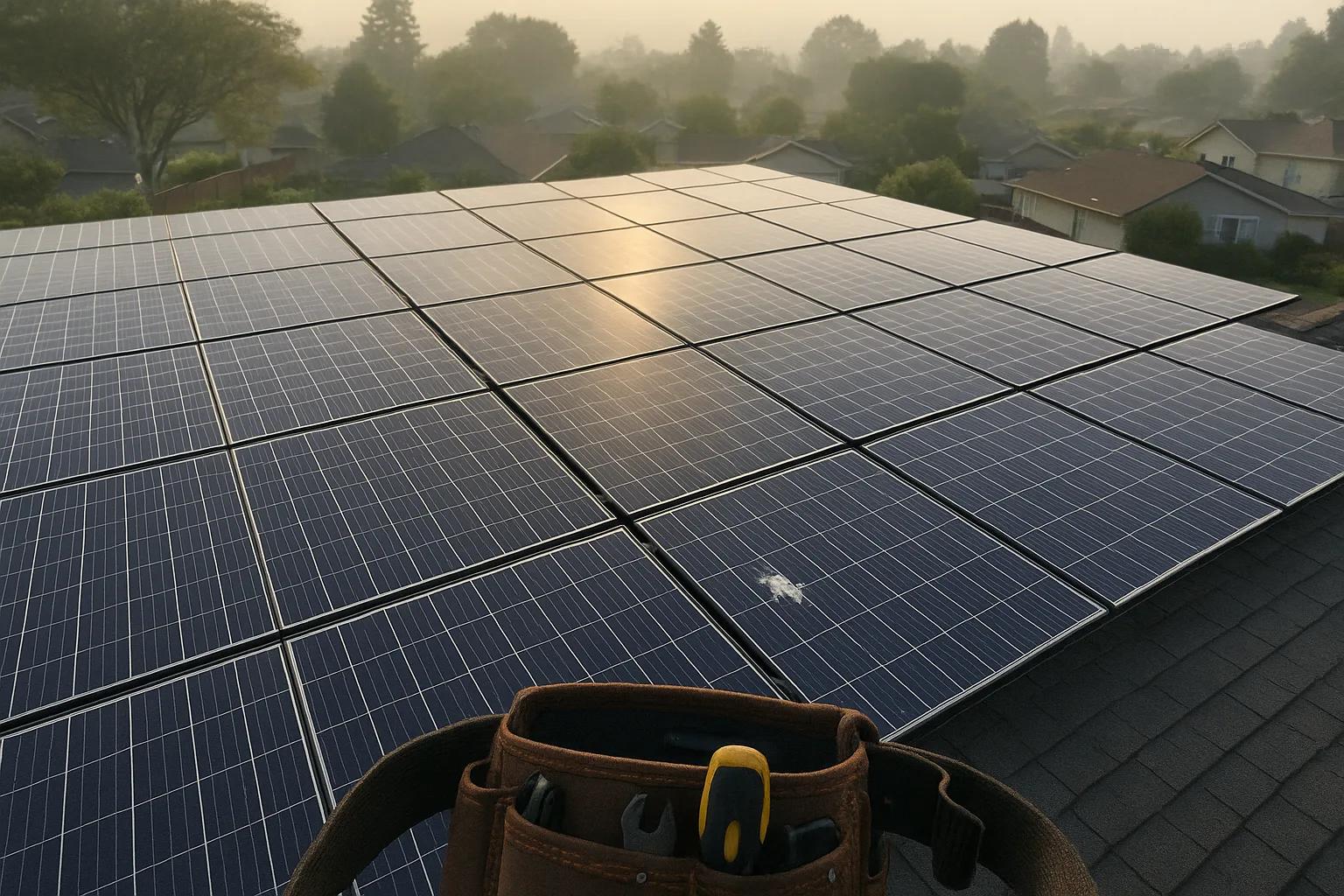
Understanding the true cost of solar means dissecting the system into its core components, each subject to its own market dynamics. The primary cost drivers include the solar panels themselves, the inverters that convert DC power to AC, the mounting and racking hardware, and crucially, the labor and soft costs associated with design, permitting, and installation. Battery storage, while optional, increasingly integrates into modern systems, offering energy resilience and greater financial arbitrage opportunities, particularly with fluctuating electricity rates. Solar panels, the most visible component, come in various types: monocrystalline, polycrystalline, and the emerging thin-film and perovskite technologies. Monocrystalline panels dominate the residential market due to their higher efficiency and sleek aesthetics, while innovations like bifacial panels capture sunlight from both sides, boosting output in specific installations. The sheer scale of global manufacturing, particularly from Asian markets, has flooded the supply chain, creating intense price pressure that directly benefits the end-consumer seeking to hedge against unpredictable energy markets, a critical concern given ongoing geopolitical tensions affecting traditional energy sources as reported by Politico. Inverters, the brain of your solar system, also come in distinct configurations. String inverters process power from multiple panels connected in a series, offering a cost-effective solution for uniform rooftops. Microinverters, installed on each individual panel, optimize performance on complex roofs with shading issues and allow for panel-level monitoring. Power optimizers offer a hybrid approach, pairing with a central string inverter to enhance individual panel output. The choice of inverter significantly influences system efficiency, monitoring capabilities, and long-term maintenance. Beyond the hardware, soft costs comprise a substantial portion of the total system price. These include sales and marketing, system design and engineering, permitting and inspection fees, and customer acquisition. Streamlining these processes through digital tools and standardized regulations has become a focal point for industry players. The reduction in soft costs, coupled with decreasing hardware prices, creates a powerful synergy that accelerates solar adoption, making the investment case more compelling for a broader demographic of homeowners.Federal & State Incentives: The Unseen Subsidies Reshaping the Math
No serious discussion of solar costs is complete without a deep dive into the incentives that dramatically reduce the net price. The federal Investment Tax Credit (ITC) remains the cornerstone, offering a substantial percentage credit against the total system cost. This credit directly reduces your tax liability, acting as a powerful incentive for homeowners to invest in renewable energy. The ITC is scheduled to maintain its current robust level for the foreseeable future, providing long-term stability for financial planning. State and local incentives layer on top of the federal credit, offering a patchwork of rebates, tax exemptions, and performance-based payments. Net metering policies are particularly critical, allowing homeowners to sell excess electricity back to the grid, often at retail rates, effectively using the grid as a giant battery. Some states offer Solar Renewable Energy Credits (SRECs), a market-based incentive where homeowners earn credits for the clean energy their system produces, which can then be sold to utilities needing to meet renewable portfolio standards. Understanding these regional variations is paramount for accurate financial projections."The real story isn't just cheaper panels; it's the systemic shift in how we value energy independence. Every dollar saved on installation now amplifies the long-term financial payoff, fundamentally changing the investment calculus for millions of homeowners."These incentive structures are dynamic, subject to legislative changes and market forces. Staying informed about the specific programs available in your locality is critical. For instance, some states offer property tax exemptions for the added value of a solar system, preventing an increase in your annual tax bill despite a significant home improvement. Others provide low-interest loan programs specifically for renewable energy installations, further lowering the barrier to entry. The cumulative effect of these incentives transforms a seemingly large upfront cost into a highly attractive, high-return investment over the system's lifespan.
The Tariff Tangle: How Trade Policy Shapes Your Quote
Tariffs, often overlooked by the average consumer, play a significant role in the underlying cost of solar components, particularly panels imported from overseas. These are taxes imposed on imported goods, primarily designed to protect domestic industries or address unfair trade practices. The solar industry has been subject to various tariffs for years, leading to complex supply chain adjustments and fluctuating prices. Understanding the tariff terrain is essential for deciphering installer quotes. Key tariffs impacting solar include Section 201 safeguard tariffs, which have been in place to protect U.S. domestic solar manufacturers, and anti-dumping and countervailing duties (AD/CVD) targeting specific countries accused of unfair trade practices. These duties directly increase the cost of imported panels, influencing the final price passed on to the consumer. However, the exact impact varies based on origin country, specific manufacturer, and any exemptions or exclusions granted through trade negotiations. For example, modules assembled in certain Southeast Asian countries have sometimes been exempt from specific AD/CVD duties, leading to shifts in manufacturing and supply chain routes. Policy decisions at the federal level can rapidly alter these dynamics, impacting the availability and pricing of panels overnight. This constant flux requires installers to maintain nimble supply chains and for consumers to recognize that the 'best' price today might differ tomorrow based on trade policy updates, adding a layer of strategic complexity akin to following the intricate player movements in the NFL draft as seen with teams like the Washington Commanders. Recent shifts in global manufacturing capacity, coupled with the sheer volume of solar panels being produced, have created a scenario where even with tariffs, the underlying cost of production has fallen so dramatically that overall prices continue their downward trend. This means that while tariffs add a layer of cost, the foundational economics of solar panel manufacturing are strong enough to absorb some of these duties without derailing the overall cost reduction trajectory. Domestic manufacturing initiatives also aim to reduce reliance on imports, further diversifying the supply chain.Navigating Installer Quotes: What to Look For
Securing multiple quotes from reputable installers is non-negotiable. A comprehensive quote should detail the system size in kilowatts (kW), the specific panel brand and model, inverter type, and any battery storage solutions. It must clearly itemize all costs, including hardware, labor, permitting fees, and interconnection charges. Beware of quotes that lack transparency or use vague terms; clarity is key to comparing offers effectively. Ask about warranties: panels typically come with a 25-year performance warranty, while inverters usually have a 10-12 year warranty. Installation workmanship warranties are also crucial, guaranteeing the quality of the physical installation for a specific period. Understand the financing options: cash purchase offers the lowest long-term cost, but solar loans, power purchase agreements (PPAs), and leases provide alternative routes to adoption, each with distinct financial implications and ownership structures.Typical System Components & Cost Drivers (Illustrative)
| Component Category | Description | Illustrative Cost Driver | Impact on Total Cost |
|---|---|---|---|
| Solar Panels | Monocrystalline, Polycrystalline, Thin-film, Bifacial | Efficiency, Brand Reputation, Output (Watts) | 25-40% |
| Inverters | String, Microinverters, Power Optimizers | System Size, Shading Conditions, Monitoring Needs | 10-20% |
| Mounting & Racking | Roof-mount, Ground-mount, Ballasted Systems | Roof Type, Pitch, Wind Load Requirements | 5-10% |
| Battery Storage | Lithium-ion (e.g., LFP), Flow Batteries | Capacity (kWh), Power Output (kW), Brand | 15-30% (Optional) |
| Labor & Installation | Electricians, Roofers, Project Managers | Regional Labor Rates, System Complexity, Roof Access | 15-25% |
| Soft Costs | Permitting, Design, Sales, Interconnection Fees | Local Regulations, Installer Overhead | 10-15% Be wary of high-pressure sales tactics or installers demanding large upfront payments. A reputable company will provide a detailed proposal, answer all your questions, and allow you time to make an informed decision. Check their credentials, read customer reviews, and ensure they are licensed and insured in your state. The installer's reputation and financial stability are as important as the equipment they propose. |
The Long-Term Financial Play: Payback Periods and ROI
The real financial benefits of solar emerge over the long term, driven by electricity bill savings and increased property value. The payback period—the time it takes for your system to pay for itself through energy savings and incentives—varies widely based on factors like system size, local electricity rates, available sunlight, and the specific incentives applied. For many homeowners, this period can range from 5 to 10 years, though significant regional variation exists. After the payback period, the electricity generated by your system is essentially free, leading to decades of pure savings. This hedge against rising utility rates provides invaluable financial predictability. Furthermore, studies consistently show that homes with solar panels sell faster and at a premium compared to comparable non-solar homes. This added property value is often exempt from property tax increases, as previously mentioned, further sweetening the investment. To visualize the impact, consider a hypothetical scenario: a 7 kW system installed for a net cost of $18,000 after incentives. If annual electricity savings amount to $1,500, the simple payback is 12 years. However, factoring in rising electricity rates (e.g., 3% annual increase), the real payback period shortens, and the cumulative savings over 25 years can exceed $50,000, not including the increased home value. This long-term perspective is critical for evaluating solar as a capital improvement.Conceptual Data Visualization: Solar Investment ROI
Imagine a stacked bar chart depicting the cumulative financial impact of a residential solar installation over 25 years. The base of the bar would represent the initial investment, gradually offset by green segments showing annual electricity bill savings. Overlaying this, a separate segment in blue would illustrate the accumulated value from federal tax credits and state rebates. A final segment in orange would show the additional value derived from SRECs or net metering credits. The line graph running across the top would track the system's net cumulative cash flow, demonstrating the point where the system becomes profitable and then its accelerating returns. This visualization would clearly illustrate the payback period and the substantial long-term financial gains, making complex ROI calculations immediately understandable.Regional Cost Breakdowns: A Patchwork of Opportunity
Solar costs are not uniform across the United States. Regional variations in labor rates, permitting complexity, local regulations, and the intensity of state and local incentives create a diverse pricing environment. For example, states with aggressive renewable energy mandates and generous net metering policies often see higher adoption rates and potentially more competitive pricing due to increased market activity. Conversely, regions with less sun exposure or fewer local incentives might have longer payback periods. States like California, Massachusetts, and New York have historically been leaders in solar adoption, driven by strong policy support and high electricity rates. These markets often feature a mature installer base and streamlined permitting processes, which can contribute to lower soft costs. In contrast, emerging solar markets might have higher initial costs due to less competition and more nascent regulatory frameworks. This regional disparity reveals the importance of localized research. Even within a state, urban versus rural installations can present different cost structures. Urban areas might face higher labor costs but benefit from higher population density, leading to more competitive installer bidding. Rural areas might have lower labor rates but could incur additional costs for travel or grid interconnection if infrastructure is sparse. These nuances mean that a single national average price for solar is often misleading; a granular, localized approach is always necessary for accurate budgeting and strategic decision-making, as complex as analyzing player performance in a major league season following a specific player's season. Price-Quotes Research Lab continually tracks these regional market fluctuations, providing insights into where the best opportunities lie for homeowners. The interplay of incentives, local demand, and installer availability creates a constantly evolving mosaic of pricing. This means that a homeowner in Arizona, with abundant sunshine and strong net metering, will face a different financial equation than one in Pennsylvania, where SRECs might play a larger role in the overall economics.The Environmental Imperative and Grid Resilience
Beyond the financial returns, the environmental benefits of solar power are undeniable. Installing solar panels directly reduces your carbon footprint by displacing electricity generated from fossil fuels. This contribution to combating climate change resonates with a growing segment of the population, aligning personal investment with global sustainability goals. The clean energy generated by your rooftop system contributes to cleaner air and water, benefiting the entire community. Solar also plays a crucial role in enhancing grid resilience. Decentralized energy generation, where power is produced at or near the point of consumption, reduces the strain on centralized power plants and transmission lines. This makes the grid less vulnerable to large-scale outages caused by extreme weather events or infrastructure failures. With battery storage, homeowners can maintain power during grid outages, providing critical energy security and peace of mind. The widespread adoption of solar power creates a more robust and adaptable energy infrastructure, moving us closer to a future of energy independence and sustainability. This shift away from reliance on volatile fossil fuel markets is not just an environmental win; it's a strategic move for national energy security. The crashing costs of solar panels accelerate this transition, making it an economically viable path for millions. Price-Quotes Research Lab's analysis confirms that the convergence of plummeting hardware costs, stable federal incentives, and evolving state policies has created an unprecedented window of opportunity for solar adoption. This is not a fleeting trend but a fundamental re-calibration of the energy market. The time to act is now, before potential policy shifts or market corrections alter this favorable equation. The path to energy independence is clearer, shorter, and more affordable than ever before. Take action: Obtain at least three detailed, itemized solar quotes from local, reputable installers in the next 30 days, specifically requesting a breakdown of hardware, labor, and soft costs, and a clear explanation of all applicable federal and state incentives.Key Questions
What caused the recent crash in solar panel costs?
The primary drivers are a significant global oversupply from massive manufacturing expansion, coupled with continuous technological advancements that increase efficiency and reduce production costs. This intense market competition pushes prices down for consumers.
How do federal and state incentives impact the real cost of solar?
Federal incentives, like the Investment Tax Credit (ITC), directly reduce your tax liability by a substantial percentage of the system cost. State and local programs add further reductions through rebates, property tax exemptions, and performance-based payments like Solar Renewable Energy Credits (SRECs), dramatically lowering the net price and accelerating the payback period.
Are tariffs still affecting solar panel prices?
Yes, tariffs on imported solar components, such as Section 201 safeguard tariffs and anti-dumping/countervailing duties, add a layer of cost. However, the underlying decline in global manufacturing costs has been so steep that overall prices continue to fall despite these duties, though specific costs can vary based on the panel's origin and current trade policies.