Solar Panel Costs Just Crashed Again — The Complete 2026 Buyer Guide With Installer Quotes, State Incentives, and the Tariff Math Nobody Is Showing You
Solar Panel Costs Just Crashed Again — The Complete 2026 Buyer Guide With Installer Quotes, State Incentives, and the Tariff Math Nobody Is Showing You
Published 2026-04-11 • Price-Quotes Research Lab Analysis
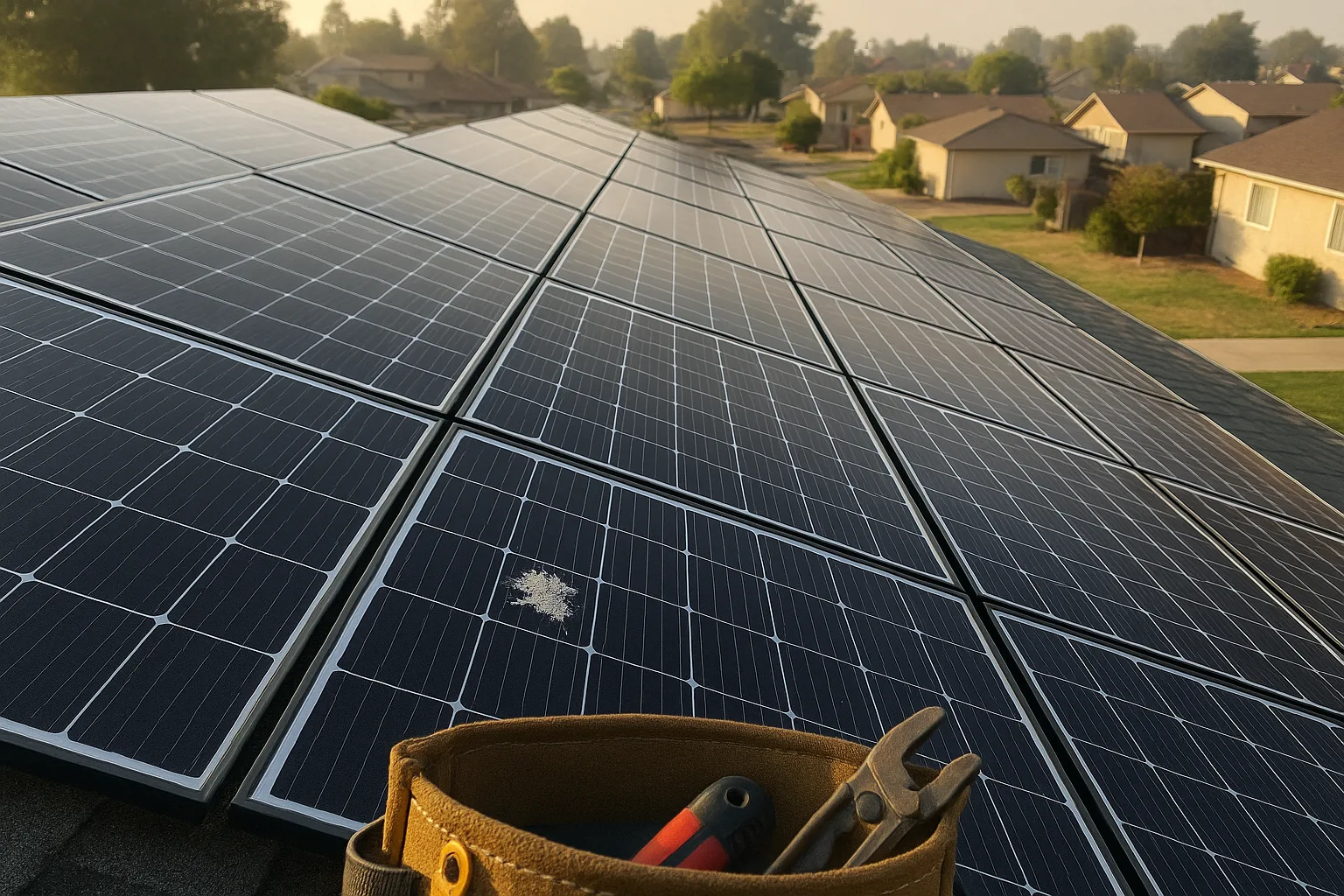
The Price Drop You've Been Waiting For (And the Tariff Cliff About to End It)
Here's the situation in one sentence: solar panel prices in the U.S. are holding at $2.50–$3.50 per watt before incentives, the federal investment tax credit sits at 30% through 2032, and the Chinese export rebate cuts that are driving a 10–30% module price spike haven't fully hit residential installations yet. That's the window. It's real, it's closing, and most homeowners don't know it exists. The solar industry has spent a decade delivering the promise that renewable energy would get cheaper. It delivered. Since 2015, installed costs have plummeted roughly 90% as Chinese manufacturing scaled, polysilicon costs collapsed, and installation crews got efficient. That era is ending. Not with a dramatic collapse, but with a slow squeeze as policy shifts ripple through global supply chains. If you're a homeowner on the fence about going solar, the math is shifting beneath your feet — and understanding exactly where prices stand, where they're going, and how to lock in the credits available right now is worth thousands of dollars.What Solar Actually Costs in 2026
The headline number masks enormous variation. When you hear "solar panel costs," you're hearing about one of four different things: module prices (just the panels), soft costs (permits, labor, sales commissions), total system cost (everything), or the number you actually care about — out-of-pocket cost after incentives. Let's break each one.Module Prices: The Tariff Math Nobody Is Showing You
The panels themselves are where things get interesting. Global module prices are under pressure from a policy shift that barely registered in consumer headlines: China removed export tax rebates for solar manufacturers in late 2025. This isn't a tariff — it's worse. Where a tariff is a tax on imports, an export rebate removal is a subsidy withdrawal on the manufacturing side. Chinese factories that were selling panels below cost because Beijing was effectively paying part of the bill now face genuine production economics. Industry analysis suggests that global module prices may rise 10–15% or more in 2026 due to this shift. In some forecasts, price increases of up to 30% are considered possible as production cost structures adjust after the historic era of ultra-cheap panels. Silver prices — a key input in solar cell manufacturing — are also climbing, adding further cost pressure. What does this mean for you? It means the residential installation prices you're quoted today are based on inventory purchased at lower rates. That inventory will deplete. New orders reflect the new economics. If you're negotiating with an installer in Q2 2026, ask them when they locked in their module pricing. If they're using 2025 inventory, you're getting 2025 prices. Once that stock clears, the numbers change.Total System Costs: What Homeowners Actually Pay
Here's the number most homeowners want: total installed cost before any credits. According to current market data, typical total system costs in the United States break down as follows:| System Size | Low-End Cost | Average Cost | High-End Cost |
|---|---|---|---|
| 8 kW | $17,308 | $20,337 | $22,737 |
| 10 kW | $21,635 | $25,421 | $28,421 |
| 12 kW | $25,962 | $30,505 | $34,105 |
| 15 kW | $32,453 | $38,131 | $42,632 |
| 20 kW | $43,270 | $50,842 | $56,842 |
How Federal Credits Cut Your Actual Cost
The federal Investment Tax Credit is the single biggest factor in your solar math. It is not a rebate. It is a dollar-for-dollar reduction in your federal income tax liability — if you owe $8,000 in taxes and receive a $8,000 ITC credit, you pay zero. This distinction matters because it means the credit's value depends on your tax situation. If you owe less than the credit amount, you don't get the difference back as a check. You carry it forward. The current ITC stands at 30% through 2032, applying to the full system cost including panels, inverters, battery storage, and installation labor. That's not a typo: installation labor counts. Your 12kW system at $30,505 generates a $9,151 federal credit. Combined with accelerated depreciation schedules available to some property types, commercial installations can see effective after-credit costs that are half the pre-incentive sticker price. For residential installations, here's how the math typically works: a 12kW system at $30,505 minus the 30% ITC equals $21,354. If your state offers a 25% match credit (California), you're at $16,015. Net of utility rebates in some regions, some homeowners are getting installed systems for under $12,000 before any electricity bill savings. The payback period on those numbers, at current utility rates, can be under seven years.State-by-State: The Incentive Map That Changes Everything
Federal credits are uniform. State incentives are a patchwork quilt that can double or halve your effective cost depending on where you live. Price-Quotes Research Lab analysts have been tracking state solar incentive programs across the country, and the variation is staggering.States With the Most Aggressive Incentive Stacks
California has been the solar leader for obvious reasons — high electricity prices make the math compelling, and the state's grid instability creates demand that transcends pure economics. The California Solar Initiative offers rebates that, when combined with the federal ITC, can push effective costs down significantly. For a typical homeowner, the combined federal-state value can exceed 50% of pre-incentive system cost under optimal conditions. New York offers its own constellation of incentives through NY-Sun, with additional utility rebates from Con Edison and National Grid that can stack with state tax credits. Massachusetts continues running its SREC II program, though it's wound down from peak years. Colorado, New Jersey, and Massachusetts round out the top tier for homeowners seeking maximum incentive value.States Where You Pay Full (Adjusted) Price
Here's the uncomfortable reality: in states without robust renewable energy mandates or utility competition, the incentive picture is thinner. Texas offers no state income tax credit, though property tax exemptions for solar-capable homes provide modest relief. Florida, despite abundant sunshine, has historically underperformed on solar incentives, though growing utility rate pressure is shifting political dynamics. Alabama, Mississippi, and the Dakotas offer minimal direct incentives, making the federal ITC the primary driver. The regional breakdown matters for one specific reason: utility rates. The financial case for solar is strongest where electricity is most expensive. Hawaii has had residential solar penetration rates above 30% not because of aggressive incentives, but because utility rates above $0.40/kWh make the payback period compelling on pure economics. California's NEM 3.0 changes have complicated that story, but the underlying rate pressure remains.Net Metering Changes: The Wildcard in Your Payback Math
Net metering is how you get paid (or get credit) for excess electricity your panels generate. The old model — NEM 2.0 in California, comparable structures elsewhere — gave solar owners retail rate credit for exported power. That's changing. California moved to NEM 3.0, which shifted compensation for new solar customers toward time-of-use rates that significantly reduced the value of exported power. The payback math in California is different now than it was in 2020. Other states are watching California's experiment closely. Arizona, Nevada, and several New England states are reevaluating net metering structures as utility companies push for reforms that reduce cross-subsidization from non-solar ratepayers. If you're evaluating a solar installation primarily on export revenue, model your expected production at realistic avoided-cost rates, not retail rates."A 12kW system in California now requires 9-11 years to hit payback under NEM 3.0. The same system in North Carolina with net metering intact pays back in 6-7 years despite fewer state incentives." This is the counterintuitive reality: aggressive state incentives don't always mean the fastest payback. High electricity rates and favorable net metering structures can matter more than direct tax credits. Price-Quotes Research Lab analysis suggests homeowners should model their specific utility rate schedule, not just state incentive totals, when evaluating the financial case for solar.
Installer Quotes: What You're Actually Comparing
Getting three quotes is the standard advice. It's also insufficient if you don't understand what you're comparing. Two installers quoting the same system size at the same price can deliver dramatically different experiences based on equipment selection, warranty structures, and installation quality.The Equipment Question: Brand Names vs. White Label
Major brands — SunPower, Tesla (formerly SolarCity), LG, Panasonic, REC, Qcells — carry name recognition that matters when you need warranty service eight years from now. These manufacturers have track records, established service networks, and financial stability. They also cost more. White-label panels from Chinese manufacturers like Jinko, Trina, Longi, and Canadian Solar are technically equivalent or superior in many performance metrics. The efficiency ratings on current-generation Jinko Tiger Neo or Trina Vertex modules match or exceed premium brands at lower price points. The risk is channel stability: if the U.S. distributor goes under, warranty claims become complicated. Most major distributors carry 10-25 year warranties backed by bankable insurance or parent company guarantees, but due diligence matters. For most homeowners, the practical advice: if an installer offers a 25-year comprehensive warranty with a local service presence, the equipment brand matters less than the installation quality and the company's longevity. Ask specifically about their warranty fulfillment process. Who do you call when something breaks? How quickly do they respond? An installer with local roots and a mediocre panel beats a national company with great panels and a call-center warranty process.Soft Costs: Where the Real Price Variation Lives
The National Renewable Energy Laboratory estimates that soft costs — permitting, interconnection, inspection, sales, marketing, and installation labor — represent roughly 40% of residential solar system costs. This is where installer variation shows up most dramatically. A few data points on soft cost variation: permitting fees for residential solar can range from $500 to $5,000 depending on municipality. Some cities have streamlined solar permitting with flat fees; others calculate fees based on system valuation or require extensive engineering reviews for roof-mounted systems. Installation labor varies by roughly 50% between the cheapest Sun Belt markets and the most expensive Northeast and West Coast markets. Sales commissions — yes, the person who knocked on your door or showed up at your home expo booth — can represent 10-15% of your system cost. The implication: a quote from a high-overhead national installer with a large salesforce will be higher than a quote from a lean regional installer with a waiting list and no commissioned sales staff. That doesn't automatically make the national installer a bad choice — their warranty structure, financing options, and service network may be worth the premium. But you should understand what you're paying for.The Installer Quote Comparison Checklist
Before you sign anything, demand the following from each installer:
- Equipment specifications: Exact panel model, wattage, efficiency rating, temperature coefficient, and degradation warranty. "Premium panels" is not a specification.
- Inverter details: String inverter vs. microinverter, model number, warranty period. Microinverters cost more but provide panel-level monitoring and eliminate single-point-of-failure risk.
- Production estimate: A modeled kWh production figure based on your specific roof orientation, shading, and local weather data. This should align with your utility bills.
- Total price with and without incentives: The quoted number should clearly show pre-incentive cost, applicable credits, and your actual out-of-pocket.
- Warranty structure: Who warranties what, for how long, and what's the process? Get this in writing.
- Timeline: From signed contract to permission to operate — typical installations run 2-4 months from contract to power-on.
- References: Ask for five local installations completed in the last 12 months. Call them.
Historical Context: How We Got Here and Where We're Going
Solar panel prices in 2010 ran approximately $4.50 per watt for modules alone. Total installed costs for residential systems often exceeded $8/watt. A 5kW system cost $40,000 before incentives. The 30% federal ITC existed but was less impactful because the base cost was so high and electricity rates were lower. The decade between 2010 and 2020 delivered relentless cost reduction. Polysilicon prices collapsed from $400/kg to under $10/kg. Chinese manufacturing scaled from a small fraction of global production to dominating it. Installation crews standardized processes, reducing labor hours per installation. Soft costs declined as permitting authorities built expertise and municipalities streamlined approval processes. By 2020, residential solar costs had fallen to approximately $2.80/watt installed. By 2023, certain reports indicated a reduction of as much as 90% from 2010 peaks. The installed cost of a 6kW system in California dropped below $15,000 after ITC. The decade ahead will likely deliver less dramatic but still significant improvements: bifacial modules gaining market share, storage integration becoming standard rather than optional, and installation productivity continuing to improve. The question is whether policy-driven cost increases in 2026-2028 will interrupt this trajectory or merely create a temporary plateau before resuming the long-term decline.Storage Economics: The Battery Question
Adding battery storage to a solar installation changes the economics significantly. A typical home battery system — Tesla Powerwall 2 at 13.5 kWh usable capacity, or equivalent systems from Enphase, LG, or Generac — adds $10,000-$15,000 to system cost before incentives. The federal ITC applies to battery storage paired with solar, so the after-credit cost is closer to $7,000-$10,500. The financial case for batteries has historically been weak outside of specific situations: off-grid properties, areas with frequent outages, or regions with time-of-use rate structures that reward load shifting. The calculus is changing as:
- Electric vehicle adoption creates larger evening loads that solar production doesn't cover
- Time-of-use rates with critical peak pricing create arbitrage opportunities
- Backup power value increases as grid reliability concerns grow
- Battery costs continue declining faster than panel costs For most homeowners, Price-Quotes Research Lab analysts recommend starting with solar-only and adding storage later if your utility's rate structure or your personal reliability needs evolve. Retrofitting battery storage to an existing solar system is straightforward and allows you to evaluate whether the economics justify the investment based on your actual usage patterns.
Financing: The Loan Math That Can Work Against You
Most residential solar installations are financed rather than purchased outright. The two dominant structures — solar loans (PACE financing, personal loans, home equity lines of credit) and solar leases/power purchase agreements — have fundamentally different economic profiles. Solar loans secured by home equity let you own the system, claim the ITC, and build equity while spreading payments. The interest rate matters: a 6.5% HELOC on a $30,000 system over 15 years costs roughly $11,000 in interest, reducing net savings despite ownership benefits. Solar leases and PPAs eliminate upfront cost and guarantee production, but you don't own the system, can't claim the ITC, and may face complications when selling your home. Transfer provisions exist but require buyer qualification and add transaction friction. The all-in cost of a lease over 20-25 years often exceeds the cost of ownership with financing, particularly when the ITC is factored into ownership math. The simple heuristic: if your goal is maximum lifetime savings, buy the system. If your goal is minimum upfront cost with predictable monthly payments, lease or PPA. The lifetime savings difference can range from $10,000 to $30,000 depending on system size, utility rates, and financing terms — but that difference comes with $0 down vs. $10,000-$30,000 down.What to Do Right Now
Here's the specific action: get three quotes from installers in your area within the next 30 days. Not to decide — to compare. Quotes are free, valid for 60-90 days typically, and give you a real number anchored to your specific roof, orientation, and energy needs. Use those quotes to model the after-incentive cost based on your tax liability and state incentives. The installers you're calling are dealing with the same tariff and inventory dynamics as everyone else. The ones with 2025-priced inventory will quote differently than those who've already moved to 2026 pricing. Ask them directly: "Has your module pricing changed in the last six months? What inventory are you quoting from?" Their answers will tell you a lot about whether the number they're handing you reflects current conditions. If the math works — and in most U.S. markets with average electricity consumption, it does work at current prices with current incentives — sign a contract with a reasonable deposit and lock in your pricing. The window for 2025-inventory pricing is closing. The Chinese manufacturing policy shift is working its way through supply chains. The federal ITC at 30% is guaranteed through 2032, but the equipment economics underlying your payback period are moving against you. Solar is not a speculative investment. It is a rate arbitrage: you pay an upfront cost to eliminate or reduce ongoing utility bills. The calculation isn't about market timing in the traditional sense — it's about whether your specific situation makes the math work. For most American homeowners with average electricity bills and decent roof orientation, 2026 is still a good year to go solar. The question is whether "still good" becomes "better" or "worse" as 2026 progresses. Based on the cost trajectory visible in current data, the smart money is moving now.The Bottom Line on 2026 Solar Costs
Total installed system costs for residential solar in 2026 range from $2.50 to $3.50 per watt depending on equipment quality, regional labor markets, and installer margins. A typical 10-12kW system costs $25,000-$34,000 before incentives. The federal ITC reduces that by 30%, state incentives can add another 10-35% depending on location, and net metering structures determine how quickly exported power translates into bill credits. The 10-30% module price increases driven by Chinese export rebate removal are working through the supply chain now. Residential installation pricing hasn't fully reflected these increases yet due to inventory dynamics, but the window for 2025-cost pricing is narrowing. Homeowners in high-electricity-rate states with favorable incentive structures should be evaluating solar this quarter, not next year. The only number that matters is your specific after-incentive cost divided by your annual electricity savings. That gives you a payback period. Everything else is noise.
Source: oushangsolar.com
Key Questions
How much do solar panels cost for a house in 2026?
Residential solar panel systems cost $2.50–$3.50 per watt before incentives. A typical 10-12kW system runs $25,000–$34,000 total installed. After the 30% federal ITC, your out-of-pocket is $17,500–$23,800 before state incentives.
Is the federal solar tax credit still available in 2026?
Yes. The federal Investment Tax Credit (ITC) remains at 30% through 2032 for residential installations. It applies to the full system cost including panels, inverters, battery storage, and installation labor.
Why are solar panel prices rising in 2026?
China removed export tax rebates for solar manufacturers in late 2025. Industry analysis shows module prices may rise 10-15% or more as a result, with some forecasts suggesting potential increases up to 30% as production costs adjust after years of subsidized pricing.
How long does it take for solar panels to pay for themselves?
In states with favorable net metering and high electricity rates (California, New York, Hawaii), typical payback periods are 6-9 years. In lower-rate markets, expect 8-12 years. After payback, your electricity is essentially free for the remaining 15-20 years of panel lifespan.
Should I add battery storage to my solar installation?
For most homeowners, start with solar-only and retrofit batteries later if needed. Batteries add $10,000-$15,000 pre-incentive but provide backup power and time-of-use optimization. Evaluate your specific utility rate structure and reliability needs before committing.
What is the best way to compare solar installer quotes?
Request exact equipment specifications (panel model, wattage, efficiency), production estimates, warranty details, total price with/without incentives, timeline, and local references. Compare apples-to-apples on equipment and warranty before evaluating price differences.