Minnesota Just Rewrote the Rules on Solar Batteries. Here's What It Means for Your Energy Bill.
Minnesota Just Rewrote the Rules on Solar Batteries. Here's What It Means for Your Energy Bill.
Published 2026-04-11 • Price-Quotes Research Lab Analysis
The $4,000 Question Minnesota Homeowners Are About to Ask
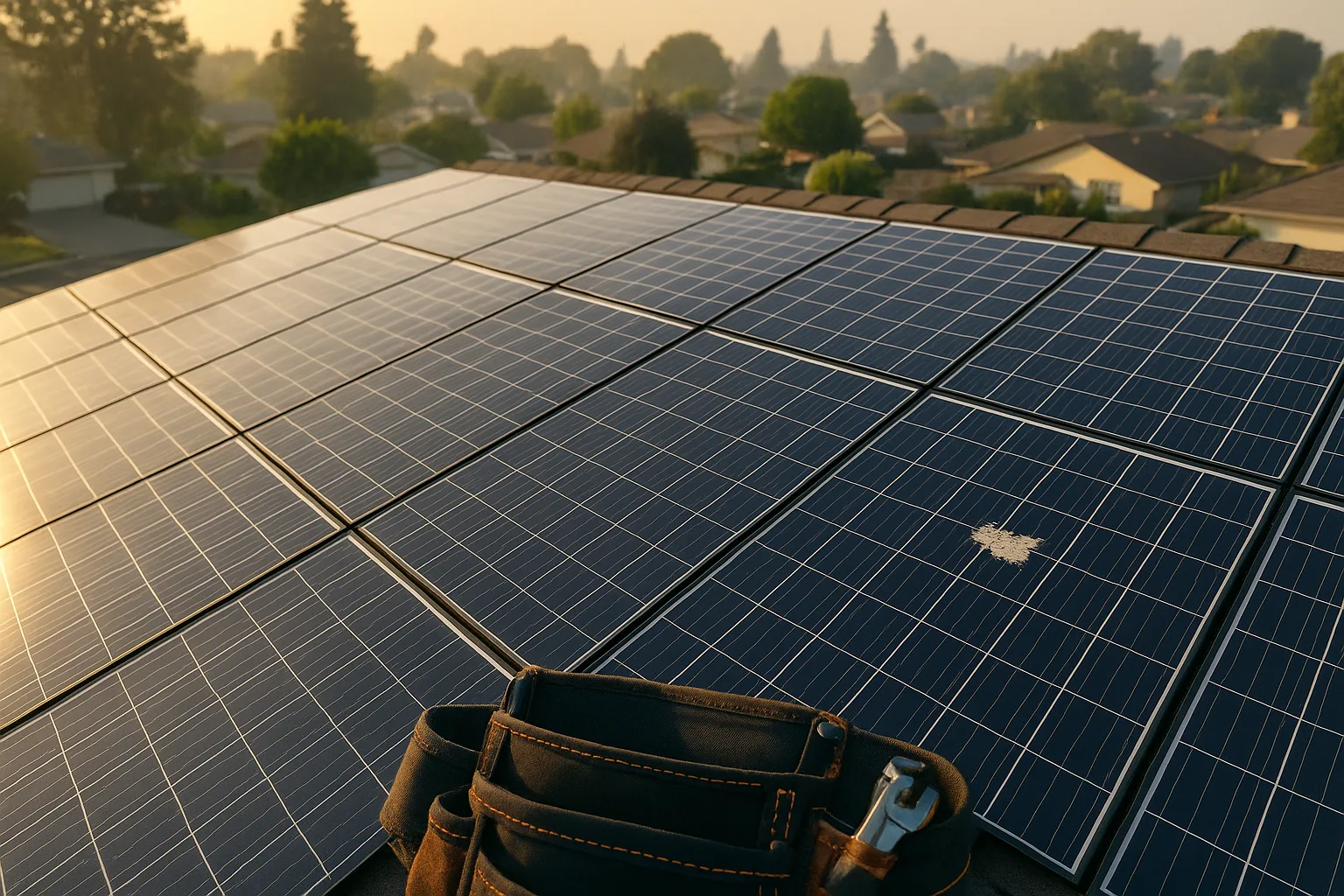
Minnesota just pushed through legislation that could fundamentally change how the state generates and stores electricity — and most homeowners haven't heard about it yet. The state legislature passed a historic permitting reform bill that streamlines battery storage installation, while a suite of new incentives makes solar-plus-storage packages suddenly viable for middle-class households who previously couldn't justify the upfront costs.
The math is changing fast. Industry analysts who track residential energy storage see a window opening — one that will likely close or shrink as programs hit funding caps and legislators adjust rebate structures to match demand. Anyone sitting on the fence about solar-plus-battery should understand what's shifting right now.
Minnesota is emerging as a leading state for battery energy storage deployment, with layered incentives, evolving grid policies, and growing market opportunities for commercial and public-sector projects, according to analysis published by EticaAG in January 2026.
What Minnesota Actually Changed
The permitting reform bill signed into law removes bureaucratic barriers that previously added weeks and sometimes months to battery storage installation timelines. Before, homeowners faced a patchwork of local regulations — some cities required multiple inspections, environmental reviews, and utility interconnection studies that could stretch a simple installation into a six-month ordeal. The new framework standardizes requirements across the state.
This matters more than it sounds. Installation delays aren't just inconvenient — they cost money. Every week of waiting is a week of paying peak electricity rates while your solar panels sit idle or a backup battery sits uninstalled in a warehouse. Streamlined permitting translates directly into lower total project costs, and those savings get passed to homeowners.
The timing isn't accidental. Minnesota's push toward 100% carbon-free electricity by 2040 is accelerating changes across the state's energy terrain, according to energy policy analysts tracking the state's transition. With electrification accelerating — electric vehicles, heat pumps, induction stoves — the grid faces mounting pressure during peak demand and seasonal fluctuations. Battery storage helps solve that problem by shifting when homes draw power from the grid.
The Money on the Table: Minnesota's Incentive Stack
Here's where things get interesting for homeowners specifically. Minnesota has layered incentive programs that can stack on top of federal tax credits, creating a total package that significantly reduces what you'll actually pay out of pocket.
The state's solar battery rebate program, administered through the Minnesota Department of Commerce, provides direct incentives for residential installations. The application process has been simplified to reduce barriers that previously discouraged participation, particularly for households without extensive technical knowledge or financial sophistication, according to Wolf Track Energy's detailed application guide.
Federal Credits Layer On Top
The Inflation Reduction Act's standalone battery storage credit deserves attention on its own. Previously, batteries only qualified for the Residential Clean Energy Credit when paired with solar. The rules changed — batteries installed standalone can now claim the credit, which covers a significant percentage of installation costs. This matters for households that want storage backup without committing to a full solar installation.
The federal credit percentage phases down over time: 30% for installations beginning in 2022-2032, then stepping down to 26% in 2033 and 22% in 2034. Minnesota homeowners who install in 2026 lock in the 30% rate before any future reductions.
Understanding the True Cost
A typical residential battery system in Minnesota — sufficient to provide backup power during outages and shift peak-hour consumption — costs between $10,000 and $20,000 before incentives. Here's how the math works:
- Base system cost: $12,000–$18,000 for a quality unit with 10-15 kWh capacity
- Federal credit (30%): Reduces cost by $3,600–$5,400
- State rebate: Varies by program availability and household income
- Net cost after incentives: Potentially under $8,000 for qualifying households
- Utility bill savings: $100–$300 monthly for households that optimize charging and discharge patterns
The payback period — how long until savings exceed upfront costs — depends heavily on your utility rate structure, usage patterns, and whether you stay in the home long enough to collect those savings. For a household paying $200 monthly in electricity, a system that cuts that bill in half pays for itself in roughly five years once incentives are factored.
The Virtual Power Plant Gap
Not everything is resolved. Minnesota advanced battery storage policy significantly, but left virtual power plant savings largely untapped, according to Vote Solar's policy analysis. Virtual power plants aggregate thousands of residential batteries into a coordinated resource that utilities can dispatch during grid stress events — essentially turning your home battery into a grid resource that earns you money.
The concept is straightforward: during summer peaks or winter cold snaps, when the grid strains and power prices spike, the utility can draw on your battery for a few hours. They compensate you for that service. Multiple utilities nationwide are piloting such programs, and the economics for participating homeowners are compelling — some programs pay $200–$500 annually just for letting the utility access your battery during rare high-demand periods.
Minnesota hasn't established robust virtual power plant frameworks yet, which means homeowners miss an ongoing revenue stream that battery owners in states like California and Massachusetts already access. This gap represents a policy opportunity — and potentially a future benefit as the state refines its energy storage regulations.
Why Minnesota Is Different From Neighboring States
The North Star State has outpaced its neighbors on storage policy, and the gap is widening. Wisconsin, Iowa, and the Dakotas lack comparable incentive structures, leaving homeowners in those states dependent primarily on federal credits without state-level amplification.
This matters for a practical reason: if you're a Minnesota homeowner considering a solar-plus-storage system, you're competing for limited federal dollars against homeowners nationwide. States with their own incentive programs effectively multiply the total subsidy, making your project's economics significantly better than a comparable homeowner's in a less supportive state.
Minnesota's 2040 carbon-free electricity mandate creates another structural advantage. Utilities operating under that mandate have strong incentives to encourage storage adoption — it reduces their need to build peaker plants, smooths their load curves, and helps them manage the intermittency of the wind and solar resources increasingly dominating their generation mix. That utility motivation translates into programs, rebates, and favorable interconnection terms that benefit homeowners directly.
The Grid Reliability Argument Nobody Talks About
Every discussion of home battery economics focuses on bill savings. That's understandable but incomplete. Storage provides resilience value that doesn't show up on your monthly statement until the moment you need it.
Minnesota experiences extreme weather events that periodically stress the grid. Winter storms, summer thunderstorms, and occasional tornadoes create power outage risks that utilities can't fully eliminate regardless of infrastructure investment. A home battery means your lights stay on, your refrigerator keeps running, your phone stays charged, and — if you've paired storage with an appropriately sized solar system — you might not even notice the outage.
The economics of resilience are hard to quantify but increasingly relevant. Climate projections suggest Minnesota's weather volatility will increase in coming decades. Each extreme event reinforces the case for backup capability, and batteries deliver that capability in a way that generators cannot: silently, automatically, without fuel logistics, and with the ability to shift from backup to bill-management mode the rest of the time.
Commercial and Utility-Scale Implications
While residential attention focuses on individual bill impacts, the bigger policy story involves commercial and utility-scale storage deployment. Minnesota's regulatory changes are shaping how large projects get built, which affects all ratepayers eventually.
Battery Energy Storage Systems at commercial and industrial sites offer demand charge reduction — a significant cost for businesses with heavy loads. A restaurant chain, a warehouse with extensive refrigeration, a manufacturing facility: all face demand charges based on their highest instantaneous power draw. Storage can shave those peaks, sometimes saving thousands monthly. Minnesota's streamlined permitting applies to these larger installations too.
At the utility scale, storage projects are proliferating. These installations provide grid services — frequency regulation, voltage support, capacity during peak periods — that benefit all customers by maintaining system stability and deferring transmission and distribution upgrades. The storage industry observers note that Minnesota's policy environment is creating conditions where utilities and independent power producers find project financing more attractive, accelerating deployment that might otherwise wait years.
What the Permitting Reform Actually Changes
For homeowners, the most concrete change is timeline. Traditional solar-plus-storage installations in Minnesota could take three to six months from contract signing to operational start, with much of that time consumed by permitting, interconnection studies, and inspection scheduling. The new permitting framework, according to attorneys tracking the legislation, standardizes and accelerates this process.
Contractors report that simplified permitting has already begun shortening installation timelines in jurisdictions that moved quickly to adopt the state framework. What previously required separate approvals from building, electrical, and utility departments can now proceed under unified guidelines. This reduces soft costs — the labor, overhead, and financing expenses that add to project prices without adding value.
Lower soft costs benefit homeowners in two ways: reduced upfront prices and faster system activation, which means earlier access to savings. A project that took six months now takes two or three. That's three months of utility bill savings you weren't getting before.
The Tax Credit Mechanics: What Homeowners Need to Know
The federal Residential Clean Energy Credit works differently from many tax deductions people encounter. It's a non-refundable credit tied to qualifying expenditures — equipment costs, installation labor, and certain related expenses. The credit reduces your federal tax liability dollar-for-dollar up to the amount you owe.
Key mechanics worth understanding:
- Installation timing matters: The credit applies in the year your system is placed in service, not when you sign a contract or make a deposit. A signed contract in December 2025 doesn't help your 2025 taxes if installation completes in March 2026.
- Carryforward potential: If your tax liability is less than the credit amount, the unused portion carries forward to future years, providing ongoing benefit.
- Home improvement vs. energy property: Battery storage installations can qualify under different code provisions depending on configuration and pairing with solar. A tax professional familiar with residential energy credits can maximize your claim.
- Documentation requirements: Retain all invoices, manufacturer certifications, and installation records. IRS guidance requires proof of qualifying expenditures and proper installation.
The interplay between federal credits and Minnesota state incentives creates optimization opportunities that vary by household. Income level affects state rebate eligibility. Tax liability affects how much federal credit you can use in a given year. Energy usage patterns affect which programs provide the best return. A consultation with an energy installer who understands these interactions — not just the technical installation, but the financial architecture — can significantly improve project economics.
Who Should Act Now (and Who Should Wait)
Not every Minnesota homeowner should rush into battery storage. The economics depend heavily on individual circumstances.
Act now if:
Wait or reconsider if:
Residential batteries come primarily in two chemistries, each with distinct characteristics. Lithium iron phosphate (LFP) dominates newer installations and represents the industry direction. LFP batteries offer longer cycle life, better thermal stability, and no concerns about cobalt or nickel supply chain issues. Most major manufacturers — Tesla, LG, Enphase, Franklin WH — have shifted or are shifting to LFP platforms for residential products. Nickel manganese cobalt (NMC) remains in some older product lines and certain applications. NMC offers higher energy density, which matters for applications where physical size is constrained, but carries trade-offs in longevity and safety margins. Capacity ratings deserve scrutiny. A battery rated at 13.5 kWh doesn't deliver 13.5 kWh to your home — some capacity is reserved for battery management, depth-of-discharge limits protect longevity, and real-world performance varies from laboratory specifications. Plan for 70-85% usable capacity when modeling savings and backup duration. Simplified permitting creates a new risk: rushed installations by unqualified contractors. Minnesota's streamlined approval process lowers barriers to entry for less experienced installers who might cut corners on electrical work, code compliance, or manufacturer specification requirements. Protecting yourself requires due diligence: Price-shopping among contractors who don't meet these standards creates false economy. A battery installed incorrectly can void warranties, create fire hazards, or simply underperform projected savings. The cheapest bid often reflects shortcuts that cost more to fix than the price difference. Storage is reshaping the economics of renewable energy in ways that go beyond individual bill savings. As Minnesota's grid increasingly relies on wind and solar generation, storage provides the flexibility that makes high-renewable grids stable and reliable. Wind generates most electricity at night when demand is low. Solar generates during the day, often peaking when demand is already satisfied by other sources. Storage captures that excess generation and releases it when demand rises — typically evening hours when solar fades and people return home. This temporal matching is essential for integrating large renewable penetrations economically. Minnesota's 2040 mandate requires utilities to fundamentally restructure their resource planning. Battery storage competes directly with gas peaker plants, transmission upgrades, and demand response programs as solutions for grid reliability. The economics increasingly favor storage, particularly as battery costs continue declining and gas infrastructure costs climb. Homeowners who install batteries now participate in this transition while capturing personal benefits. They're also building skills and familiarity with storage technology that will become increasingly common. The homeowner who installs a battery in 2026 will understand the technology better when they're considering vehicle-to-home integration, community storage programs, or utility-managed home energy management systems that emerge in coming years. If you're a Minnesota homeowner considering battery storage, the next step is straightforward: get proposals from at least three licensed installers. The information gathering is free, the proposals are typically free, and you'll learn specific numbers for your home rather than relying on general examples. When evaluating proposals, focus on: Don't rush, but don't wait indefinitely either. Federal credit rates remain at 30% but eventually step down. State rebate programs operate on fixed budgets that can exhaust mid-year when demand spikes. The longer you wait, the more you risk submitting an application when funds are depleted or rates have changed. Minnesota just rewrote the rules on solar batteries. The question is whether you'll take advantage of the new framework before it evolves again.
The Technology: What You're Actually Buying
The Contractor Selection Problem
The Bigger Picture: Minnesota's Energy Future
What to Do Right Now
Key Questions
What new battery storage incentives does Minnesota offer in 2026?
How much does a home battery cost in Minnesota after incentives?
Can I get a federal tax credit for a standalone battery without solar?
What's the timeline for installing a battery in Minnesota?
Does Minnesota's virtual power plant program pay homeowners?
What's the payback period for a home battery in Minnesota?
How do Minnesota's battery storage policies compare to neighboring states?
Related Services