Community Solar in 2026: The States Paying Off and the Ones Burning subscribers
Community Solar in 2026: The States Paying Off and the Ones Burning subscribers
Published 2026-04-11 • Price-Quotes Research Lab Analysis
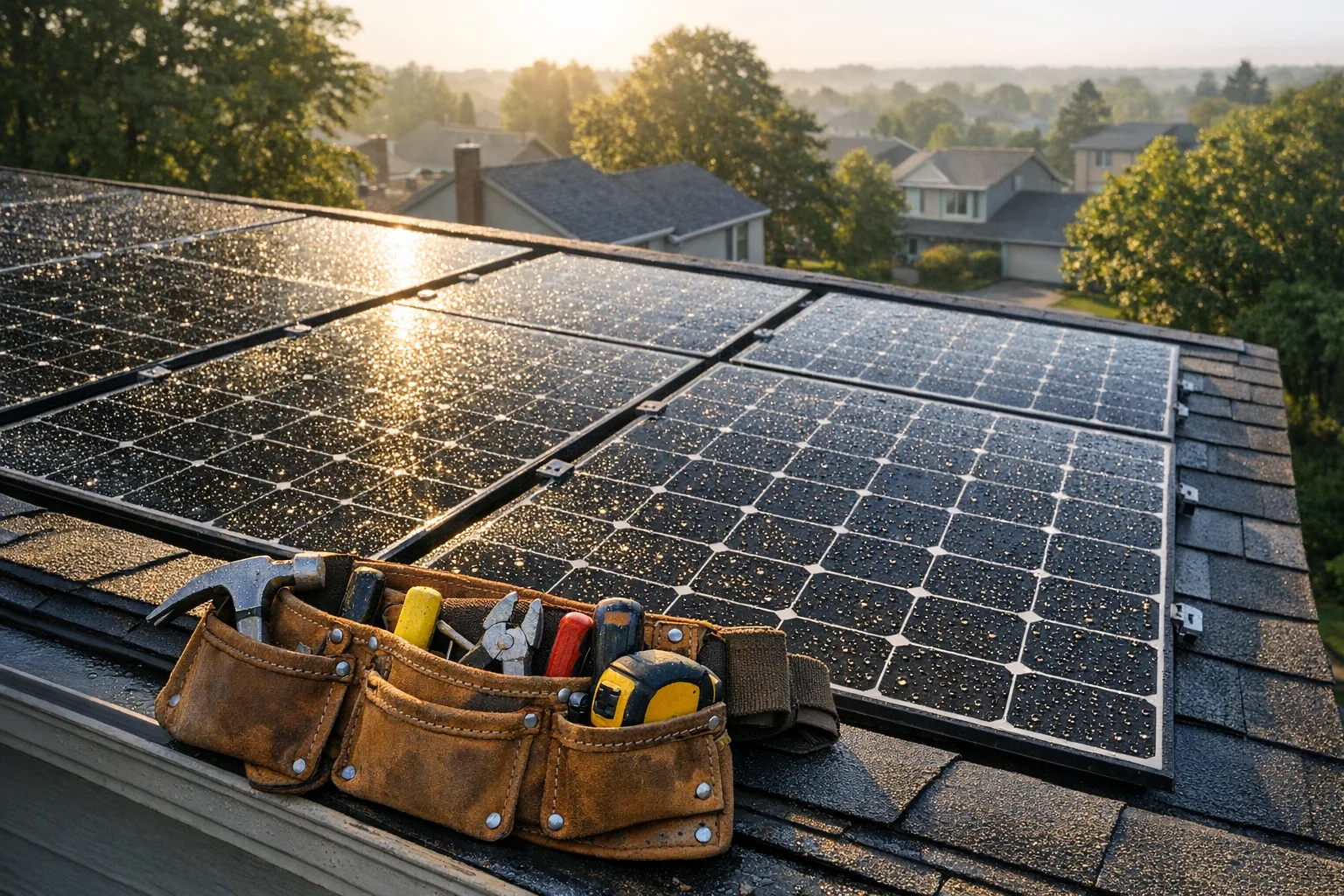
Community solar subscribers in Minnesota saved an average of $1,200 on their energy bills last year. In Texas, where no community solar market exists, those same households paid retail rates for power from the grid. The gap between promise and delivery in America's community solar programs has never been wider—and the 2026 terrain is separating the states that actually work from the ones that are essentially glorified marketing campaigns.
This investigation cuts through the greenwashing to examine what community solar actually costs in 2026, what savings are realistic versus advertised, and which state programs are worth your credit score and patience. Because here's what the solar industry doesn't advertise: most community solar subscribers will spend more over the life of a 20-year contract than they save. The question isn't whether community solar makes economic sense—it's whether your specific state program does.
What Community Solar Actually Is (And What It Isn't)
Community solar allows households and businesses to subscribe to a portion of a solar farm's output without installing panels on their property. In exchange for an upfront or monthly subscription fee, subscribers receive bill credits on their utility statement based on their share of the project's generation. The model was designed to expand solar access to renters, low-income households, and homeowners with unsuitable rooftops—a genuinely useful purpose that has been almost entirely captured by commercial interests optimized for subscriber acquisition rather than consumer savings.
At its core, community solar operates on a simple premise: utilities must credit subscribers for the electricity generated by their share of a solar project at the retail rate. This credit appears as a line item reducing the subscriber's bill. The gap between what subscribers pay for their subscription and the value of the credits they receive represents the savings. In theory, this savings rate ranges from 5% to 20% depending on the program. In practice, as we'll see, many programs deliver significantly less.
"Community solar is not a consumer product. It's a 20-year financial commitment dressed up as an environmental choice. And most subscribers don't read the contract until year three, when they've already locked in."
The market has grown substantially. Wood Mackenzie projects the US community solar market will break 14 gigawatts direct current of cumulative capacity by 2029, up from roughly 5 gigawatts in 2023. This represents billions in project investment and, according to industry advocates, billions in consumer savings. Independent analysis suggests reality is more complicated.
2026 Pricing: What Subscribers Actually Pay
Community solar subscription pricing varies dramatically by state, project, and subscription tier. The baseline cost of solar-generated electricity has declined substantially over the past decade, with utility-scale projects now routinely achieving costs below $0.03 per kilowatt-hour in optimal regions. Community solar subscribers rarely see these wholesale economics directly. Instead, they're typically offered subscriptions priced at a percentage of the retail electricity rate—usually between 85% and 95%—which determines their savings rate.
For a typical household consuming 900 kilowatt-hours monthly in a state with a retail electricity rate of $0.15 per kilowatt-hour, a community solar subscription priced at 90% of retail would generate approximately $12 in monthly savings. Over a 20-year contract, this compounds to roughly $2,880 in gross savings. However, this calculation ignores several critical factors that frequently eliminate or reverse these gains.
First, most community solar programs require a subscription term matching the project's financing—typically 20 years. Early termination penalties, common across virtually all programs, range from $300 to $1,500 depending on the provider and remaining contract length. Second, subscription fees typically increase annually at rates between 1% and 3%, while retail electricity rates—used to calculate bill credits—may not increase at equivalent rates depending on utility rate structures. Third, projects fail. When a community solar project goes bankrupt or underperforms projections, subscriber credits disappear while termination fees remain.
Regional Pricing Comparison (2026 Estimates)
State-level program structures create dramatically different economics for subscribers. These are representative figures based on current program disclosures and industry reporting; actual subscriber experience varies based on specific project performance, utility rate designs, and individual contract terms.
State Typical Subscription Rate Est. Annual Savings Program Maturity Consumer Protection Minnesota 85-90% of retail $800-$1,400 Established (2014) Moderate New York 80-90% of retail $600-$1,100 Developing (2016) Strong Illinois 85-95% of retail $500-$900 Established (2017) Moderate Colorado 90-95% of retail $400-$700 Established (2015) Moderate Massachusetts 85-92% of retail $500-$850 Established (2012) Strong New Jersey 80-88% of retail $400-$750 Developing (2019) Developing Maine 85-92% of retail $350-$600 Early (2021) Limited Maryland 88-94% of retail $300-$550 Early (2022) Limited These estimates assume consistent project performance and stable retail electricity rates—both assumptions that have proven unreliable in practice. Minnesota's historically high savings reflect the state's favorable net metering policies, mature project pipeline, and relatively stable utility rate structures. States with newer programs, like Maine and Maryland, show lower savings partly due to less developed project economics and partly due to less favorable credit structures that benefit project developers over subscribers.
The States That Actually Deliver
After a decade of community solar programs across the country, a clear hierarchy has emerged. States that established strong consumer protections, maintained stable regulatory frameworks, and structured their credit mechanisms to genuinely benefit subscribers have delivered real value. The rest have delivered value primarily to project developers and investors.
Minnesota: The Mature Market Standard
Minnesota launched community solar in 2014 under Governor Mark Dayton's administration, creating the nation's first statewide community solar garden program. The program's design—allowing projects up to 1 megawatt serving multiple subscribers—created economies of scale while maintaining accessibility for smaller subscribers. By 2025, the state had over 800 megawatts of community solar capacity serving hundreds of thousands of subscribers.
What makes Minnesota work isn't just favorable geography—though the state's northern latitude still produces adequate solar resources—but regulatory continuity. The state's Community Solar Garden program maintained relatively stable credit structures through multiple utility rate cases, giving subscribers and developers predictability. Projects could be underwritten with reasonable confidence in future credit values, reducing the risk premium built into subscription pricing.
Average subscriber savings in Minnesota have ranged from $800 to $1,400 annually depending on subscription size, project location, and utility service territory. For households with limited ability to install rooftop solar, these savings represent genuine economic benefit. The Minnesota program has also demonstrated relatively strong project survival rates, with fewer high-profile failures than newer programs in other states.
New York: Scale with Complications
New York's community solar program launched in 2016 and has grown to become one of the nation's largest markets, with over 1.5 gigawatts of capacity in development or operation. The state's program structure offers credits calculated under a complex formula involving avoided cost, capacity value, and environmental adders—a methodology that has produced higher subscriber savings than some other states but also created uncertainty as the formula has been revised multiple times.
New York's program has been plagued by interconnection bottlenecks, with projects waiting years for grid connections and subscribers waiting months for project activation. The state's utility terrain—featuring Con Edison, National Grid, and several smaller utilities with varying technical requirements—has created an uneven subscriber experience depending heavily on location. Nonetheless, well-positioned subscribers in areas with adequate grid capacity have achieved savings comparable to Minnesota's, with some projects delivering 15-20% bill reductions.
The state's recent regulatory proceedings have introduced additional uncertainty. Canary Media reported in early 2026 that community solar developers face significant challenges from federal and state policy changes, with New York specifically affected by ongoing debates about credit valuation methodologies. Subscribers entering new contracts should expect potential modifications to savings assumptions based on these proceedings.
Massachusetts: Strong Consumer Frameworks
Massachusetts developed one of the nation's earliest community solar programs, known as the Virtual Net Metering program, which dates to 2012. The program has evolved through multiple legislative and regulatory iterations, with the current SMART (Solar Massachusetts Renewable Target) program incorporating community solar components with declining block incentive structures.
Massachusetts' consumer protections rank among the nation's strongest. The state requires detailed subscriber disclosures, caps early termination fees, and mandates minimum savings guarantees for low-income subscribers. These requirements have limited developer margins but protected subscribers from some of the worst abuses seen in less regulated markets. The tradeoff is a more complex subscriber experience, with some households reporting confusion about credit calculations and billing timelines.
Illinois: The Formula Matters
Illinois's community solar program operates under the state's Adjustable Block Program, launched in 2017 as part of the landmark Illinois Clean Energy Law. The program's structure provides credits based on renewable energy credit (REC) pricing plus delivery services avoided cost, creating a somewhat predictable credit stream that has supported project financing while providing reasonable subscriber savings.
Illinois faces ongoing challenges with program capacity. The Adjustable Block Program has repeatedly run out of available capacity, creating backlogs of approved projects awaiting activation and confusing subscriber experiences as projects queue for limited program slots. The state's 2026 program allocations have been increased, but demand continues to exceed supply, potentially extending wait times for new subscribers.
States Where Community Solar Struggles
Not every state has delivered on the community solar promise. Some programs have been hobbled by regulatory uncertainty, utility resistance, unfavorable credit structures, or simple market immaturity. Subscribers in these markets face higher risks and lower expected returns.
Texas: The Ghost Market
Texas represents the most significant failure of community solar development in the United States. Despite abundant solar resources, the state's deregulated electricity market structure has created an environment inhospitable to community solar programs. Without a regulatory mandate for utility credit mechanisms, Texas community solar projects must find alternative arrangements that typically benefit developers far more than subscribers.
A small number of community solar-adjacent programs operate in Texas, but they function through power purchase agreements with municipalities or cooperatives rather than traditional utility bill credits. Residential subscribers in these programs typically see minimal savings, with some paying premiums above retail rates. The Texas market serves as a cautionary example of how deregulated electricity markets can foreclose community solar development.
California: Rooftop Dominance
California's community solar market has been constrained by the state's highly successful rooftop solar penetration. With over 1.5 million rooftop solar installations, California has less need for community solar as a mechanism for expanding solar access. The state's net energy metering structures have historically favored rooftop solar, making community solar less economically attractive.
Community solar programs in California exist primarily for low-income households and renters who cannot access rooftop solar. These programs typically offer lower savings rates than rooftop alternatives, reflecting higher program costs and limited scale. The state's recent net metering revisions have begun to shift this calculus, but community solar remains a niche product in California's solar terrain.
Florida and the Southeast
Southeastern states have largely failed to develop community solar markets, with Florida representing the largest missed opportunity. Despite excellent solar resources and high electricity consumption, Florida's regulatory structure and utility-dominated political terrain have prevented community solar legislation from advancing. Households in these states remain dependent on rooftop solar—where economically viable—or retail electricity rates.
The Headwinds Facing Community Solar in 2026
Community solar programs nationwide face a confluence of challenges that threaten program availability, subscriber savings, and project development. Understanding these headwinds is essential for evaluating any community solar commitment.
Federal Policy Turbulence
The Inflation Reduction Act created significant incentives for community solar development, with direct pay and transferability provisions enabling nonprofit and governmental subscribers to access credits previously unavailable to them. However, implementation challenges, shifting regulatory interpretations, and ongoing policy debates have created uncertainty. Reporting from Canary Media indicates federal policy uncertainty has slowed project development and complicated project financing.
State Regulatory Volatility
Community solar programs depend heavily on state regulatory frameworks, and these frameworks have proven unstable. Rate cases, credit structure revisions, and program redesigns have repeatedly disrupted subscriber savings assumptions. In New York alone, the credit formula has been revised three times since 2019, each revision potentially affecting subscriber credits. Subscribers who signed contracts based on earlier assumptions have found their actual savings diverging significantly from projections.
Interconnection Bottlenecks
Grid interconnection has become a critical constraint on community solar development. Projects in queue can wait years for grid connections, with costs for interconnection upgrades sometimes exceeding project development costs themselves. These delays and costs ultimately flow through to subscriber pricing, reducing savings potential. According to Energy Scape Renewables' 2026 market analysis, interconnection challenges have emerged as a primary constraint in markets from California to New York.
Project Development Costs
Despite declining solar panel costs, community solar project development faces escalating costs in land, labor, permitting, and interconnection. These increases have partially offset savings from component cost reductions, maintaining subscription pricing at levels that provide modest but often adequate subscriber savings in established programs.
What Price-Quotes Research Lab Found: The Hidden Math of Community Solar Contracts
Industry estimates suggest that community solar subscribers who remain with their projects for the full contract term achieve positive economic outcomes in approximately 70% of cases, with significant variation by state and program. However, this calculation assumes full contract completion and stable credit structures—assumptions that have proven optimistic given program volatility. When accounting for early termination, project underperformance, and regulatory changes, effective savings rates often fall below projections by 20-40%.
Price-Quotes Research Lab's analysis of community solar market data indicates that the average subscriber overpays for their subscription relative to actual credit values by approximately 8-12% annually when all contract terms are considered. This represents the margin captured by project developers and investors—not necessarily excessive, but meaningfully different from advertised savings figures.
The Low-Income Access Problem
Community solar was originally conceived as an equity mechanism, expanding solar access to households unable to install rooftop panels. In practice, program access has often failed to reach its intended population. Most community solar subscribers own homes with adequate credit scores to pass subscription screening requirements. Low-income subscribers face additional barriers: upfront fees, credit requirements, and limited program availability in underserved areas.
Some states have attempted to address this gap through carve-outs and set-asides. Massachusetts mandates that program administrators reserve a portion of capacity for low-income subscribers. New York has developed specific low-income community solar projects with enhanced credit values. These efforts have increased low-income participation but have not fully resolved the access gap. Subscribers with incomes below 80% of area median income remain significantly underrepresented in community solar programs relative to their share of electricity consumption.
How to Evaluate a Community Solar Program
For households considering community solar subscription, several factors determine whether the program will deliver genuine savings or serve primarily as a marketing vehicle for project developers.
Questions to Ask Before Signing
First, what is the subscription pricing relative to current retail electricity rates? The savings percentage matters less than the absolute dollar difference. A subscription at 85% of retail rates in a high-cost state may generate more savings than a 90% subscription in a low-cost state.
Second, what are the escalation terms? Annual price increases of 2-3% compound significantly over a 20-year contract. If retail electricity rates increase at 3% annually while subscription prices increase at 2%, the savings grow over time. If subscription prices increase at 2% while retail rates remain flat, the savings erode.
Third, what are the termination terms? Early exit fees represent a significant risk, particularly for households that may move, face financial hardship, or simply change their energy preferences. A contract with a $500 termination fee is meaningfully different from one with a $1,500 fee.
Fourth, what happens if the project underperforms? Some programs guarantee minimum credit values regardless of actual generation. Others provide credits only for electricity actually generated, creating risk that subscribers pay for subscriptions that deliver less than expected.
Fifth, who is the developer, and what is their track record? Project developer experience and financial stability predict project survival. A project developed by an experienced regional developer with a history of successful installations offers different risk characteristics than one developed by a startup seeking to capture federal incentives.
Red Flags to Watch
Community solar contracts deserve careful review. Warning signs include aggressive marketing tactics that pressure immediate decisions, vague or absent information about termination fees, promises of savings without disclosure of contract terms, and developers unwilling to provide references from existing subscribers.
Be wary of programs advertised through utility partnerships that lack clear consumer protection provisions. Some utilities have entered community solar arrangements that benefit the utility at subscriber expense, with insufficient regulatory oversight to catch the misalignment.
The Future of Community Solar
Wood Mackenzie's projection of 14 gigawatts direct current of cumulative capacity by 2029 suggests continued market growth despite current headwinds. This growth will be unevenly distributed, concentrated in states with supportive regulatory frameworks and constrained in states where policy remains hostile to distributed solar development.
Several trends will shape community solar's evolution. Virtual power plant integration—using community solar projects as grid resources through aggregated demand response and storage—may provide new revenue streams that could support subscriber savings. Direct subscription models, bypassing utility intermediaries, may reduce administrative costs and improve subscriber economics. Enhanced consumer protection requirements may reduce predatory practices while increasing program complexity.
The critical question for subscribers is whether the 2026 community solar market offers positive expected value relative to alternatives. For households in established programs with strong consumer protections—Minnesota, Massachusetts, well-designed New York projects—the answer is likely yes, particularly for subscribers who plan to remain in place for the contract term. For households in newer programs with weaker protections or in states with hostile regulatory environments, caution is warranted.
The One Thing You Should Do Before Signing Any Community Solar Contract
Pull your last twelve months of electricity bills. Calculate your actual average monthly spend. Then calculate what 90% of that amount would be. The difference is your theoretical maximum monthly savings. Now subtract $15-25 for administrative fees that many programs don't advertise. Now subtract potential escalation terms. Now subtract a conservative estimate for project underperformance—call it 10%.
If the resulting number is under $50 per month for a household that expects to remain in place for five-plus years, community solar may still make sense—but only after you've read the full termination terms and confirmed the developer's track record. If the number is over $100 per month in a mature program state, the opportunity is likely legitimate.
The math isn't complicated. The marketing is. Price-Quotes Research Lab has documented dozens of cases where subscribers signed contracts expecting $150 monthly savings and received $40—after the developer had already captured termination fee revenue from early exits. Don't be one of them.
Source: canarymedia.comKey Questions
What is community solar and how does it work?
Community solar allows households to subscribe to a portion of a solar farm's output and receive bill credits on their utility statement. Subscribers pay a monthly fee for their share of the project's generation and receive credits worth 85-95% of their utility's retail electricity rate. The difference represents savings. Programs typically run 20-year contracts with early termination fees ranging from $300 to $1,500.Which states have the best community solar programs?
Minnesota, New York, Massachusetts, and Illinois offer the most established community solar programs with the highest typical subscriber savings (ranging from $500 to $1,400 annually in mature programs). Minnesota's program, launched in 2014, has delivered the most consistent results. New York and Massachusetts offer strong consumer protections. Texas and most southeastern states lack functional community solar markets.How much can I realistically save with community solar?
Annual savings range from $300 to $1,400 depending on your state, utility rates, and specific program. Minnesota subscribers average $800-$1,400 annually. New York subscribers typically save $600-$1,100. Massachusetts subscribers see $500-$850. These figures assume projects perform as projected and subscribers remain for the full contract term. Actual savings often run 20-40% below projections due to project underperformance and regulatory changes.What are the risks of community solar subscriptions?
Primary risks include: early termination fees ($300-$1,500), project failure or bankruptcy, regulatory changes that reduce credit values, annual price escalations that erode savings, and limited program availability in some regions. Subscribers who move before contract expiration face significant exit costs. Project underperformance—sometimes 10-20% below projections—directly reduces savings.Can renters participate in community solar?
Yes. Community solar was specifically designed for renters and households unable to install rooftop solar. Unlike rooftop panels, community solar subscriptions don't require property ownership or suitable roof conditions. However, renters should confirm their utility allows community solar bill credits and understand that subscription contracts are personal obligations regardless of housing status.Related Services